Saturday, 3 August 2013

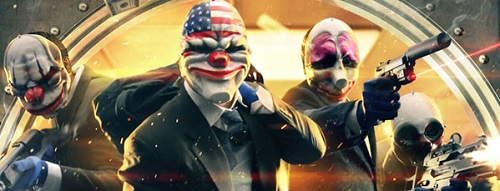
Worth Writing Home About: Payday 2 Beta

So it's a little known fact about me that I am a complete sucker for online shooters. Not your Quakes or your Counter-Strikes, mind you - they're for children and grown adults who still have the superior reaction times of children. No, I like my shooters the way I like everything in life - just a little bit different. Payday was one of those shooters.

Both games in the series have you and three others tackle criminal jobs from bank heists to drug heists to... jewel heists (you get the picture) and you do this in general by completing objectives (drill the bank vault, signal the boat, find the explosives etc). Hindering you in this regard are many, many policemen. The games could be described as L4D with cops instead of zombies, but to be honest that might be overselling Payday's AI. Here are some of the ways in which Valve's zombies are smarter / more plausible than Payday's people:
  • Zombies run on curved lines, making them more organic-seeming and less predictable.
  • Cops run in straight lines.
  • Zombies take tactical advantage of their strengths and weakness (ie they run at you as soon as they see you).
  • Cops take almost no tactical advantage of their strengths and weaknesses (ie they run at you as soon as they see you).
  • Zombies die when you shoot them in the face.
  • Cops die when you shoot them in the face three or four times.


I loved the first game despite its laughable AI. I guess I did so primarily because it was a riff on the L4D formula, which itself is still fresh enough to support similar products with different body paint. Payday delivered the same style of frantic co-op drama that Turtle Rock's zombie game did, but I think profited from more varied objectives contextualised by a heist movie setting that's more interesting and liberating than L4D's get-to-the-chopper overtones. It's fun to shoot zombies with your mates; but it's more fun (at least in principle) to stride into a bank and tell everyone to get down while your mates disable the cameras and beat the vault codes out of the manager. Payday 1, then, was an average co-op shooter with horrible AI, but it was attached to a compelling and ambitious setting.

The first thing to say about the sequel is that it does everything except fix the one bit that needed to be. For all of Payday's reactive, multi-stage missions, for all of its weapon customisation, enhanced stealthing and more varied heists... no matter how much you enjoy these things (and I have done) the core of the game will be waiting just around the corner to slap you over the head and remind you that you're not an awesome super-crook; you're just a guy (can you use 'guy' as a unisex term in this way? Discuss.), in a game, pretending to be a super-crook by shooting dozens of zombie cops in the face (many times each).

The second thing to say is that a bunch of other stuff has changed. There is now a more extensive, XP-based weapon and character customisation system. Enough said about that. There is also a broader range of stealth options in the levels themselves, which is appreciated. It's still bloody hard to pull off a stealth run (and when one goes wrong it's doubly depressing that the relative complexity of the stealth systems isn't reflected in the relentless combat that your bumbling has triggered); but it's eminently more possible than it was in the first game, and more interesting to do, too.


The scale of the levels has been altered too. It's worth noting that this is only the beta, and it comes with what I assume is a fraction of the full complement of maps (it's less than ten at the mo), but what is available is on a much smaller scale than the last batch. Gone are the days of being spread out over a vast complex of rooms and corridors; now we have much more intimate spaces. It feels less dynamic, but more plausible. It's hard to believe anything that happens in these games, but I guess four men are more likely to hold up a two storey jewelry shop on the high-street than a banking conglomerate. Sadly one repercussion of pinning the players into small spaces seems to have been the complete paralysis of the mission design team. Tasked with finding reasons to keep the criminal gang in a specified location for a particular length of time, the only thing they've been able to come up with is to drill holes in things, which takes loads of time, apparently, and is subject to frequent mechanical hitches. When you're not waiting for a drill to finish you're waiting for a van (or a boat, or a helicopter) to show up and whisk away the money. I know this happened a lot in the first game, too; but it seems worse here. No level has more than two real objectives: get the money, get out. I realise that's what a heist is, but what happened to interrogating bank managers, blowing through roofs and freeing captive prisoners?

Again, I should note that there's loads of the game I've not seen yet; but what I have seen doesn't fill me with confidence. Presumably the downsizing was in order to make way for the series' new USP: the multi-stage missions where events in later maps are determined by performance in the earlier ones. Sadly there's only one mission available with three stages at the mo, so I can't comment on how well that's working. 

I'm aware that this is sounding a bit overwhelmingly negative. I don't mean it to - I've had fun with Payday 2, and I'm dying to see the new maps. I love the efforts Overkill have gone to to make this a world, not just a series of missions. I like being able to see my money and guns on a table in my safehouse, and getting a little audio briefing before a job. The guns are meatier too. It's just that I wish all these cool things were built around a better, more plausible game. Payday has always been close to delivering a truly special experience; the holistic career criminal experience. All it would take is half the cops with twice the brains. I appreciate that one little sentence entails years of work, but I think Payday is worth it. I like interacting with other people in more interesting ways than shooting them multiple times in the face, and Payday is still one of the best opportunities to do that.

I probably shouldn't score this since it's only a beta, but I think you're smart enough to appreciate that and judge accordingly.

Polish: 1 out of 2
Tilt: 1 out of 2
(Scoring explained here)

Payday 2 is available on Steam for £24.99, or £29.99 for instant beta access.

Friday, 19 July 2013

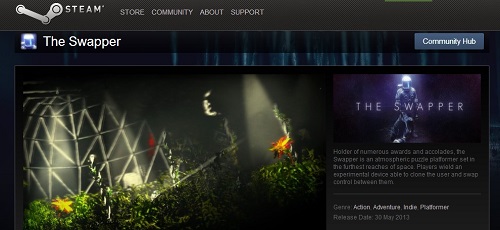
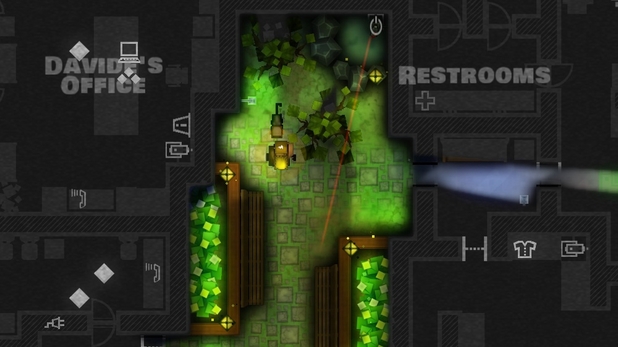
The Swapper Postmortem - What Went Right


I feel like this is going to entail a lot of brain-work on my part when I should be writing my MA dissertation on sustainable contractual justice, so if you don't mind I'm just going to launch straight into it.

Needless to say, spoilers throughout.

What Went Right
Balance of Subtlety in Exposition
It is so hard to find the sweet spot between obvious and obscure. That we seem to have hit upon it is probably a matter of luck more than anything else. The challenge you have with the sorts of narrative mechanics we're using is that:
  • it's hard to keep the player's attention for long, owing to lack of interactivity in the narrative itself and lack of on-screen visual resources (no fancy animations, no facial expressions)
  • when you do have the player's attention you generally have to cover a lot of ground very quickly; a kitchen-sink approach to sci-fi tropes convolutes matters
  • different players pay different attention to both optional and forced narrative delivery; you need to give everyone the bare bones to keep moving forward, but give those that want it that bit more
  • it's super hard to playtest objectively, and - if I can say it without being lynched - informed opinions about games narrative are harder to find than bugs are
My fear in advance of release was that the game would be too difficult to fathom. This, to some degree, has been borne out. An awful lot of reviews refer to the protagonist as a man; in fact that little detail is a great barometer for whether or not someone's been paying attention / I've made it too obscure. 

Incidentally, I read some interesting discussion about whether or not the protagonist's gender is a spoiler. Part of me thinks we should have asked reviewers not to mention it (in fact I rather assumed most would choose not to for players' sake) because it does give you some clue as to her identity and to what's going on. The point made on the comments thread was that since the gender is never actually specified to you there's no reason to assume she's a boy or a girl, and the fact that she turns out to be a girl ought no more be a spoiler than if she turned out to have red hair, or be called Clive.

It's true that we don't do a lot of work in The Swapper to guarantee players' following of the story. In Penumbra we had load screen texts where the player directly reminds you of the salient stuff that's happened up to now precisely to solve these problems; indeed it's something games like Driver: San Francisco and Remember Me do to mind-numbing excess. In The Swapper there are three cinematic scenes which progress the plot, and for the most part they're the only time that we really underline the important points. In fact, it was only a week or two before release that Olli - I think with good insight - insisted we re-record lines for the final Theseus scene which more clearly emphasised the complicated existential situation Scavenger/Chalmers/Dennett finds hirself in. 

On another sidenote, I had male voices in mind for all the characters when I wrote them, but the possibility of a female cast was on the agenda. Olli decided on the switch, and I was all in favour, the week before we recorded. What we left open - because, really, it didn't matter - was the original gender of Chalmers and Dennett. I think maybe we left in some clue in one direction or another, but in the end that character sounds female because it's a female body, and I don't know that assumptions can be made beyond that (unless I've forgotten some further reference in the final script, which frankly is possible).


Stimulating Thought, Not Providing Answers
I think there is an answer to the mind/body problem. I think there is no such thing as a soul or a non-material realm, and I think consciousness will turn out to be identified with some kind of physical function or arrangement, with its experiential quality essentially explained away. Nothing would give me more pleasure than to construct a game like a logical argument for that conclusion, and there are some stubborn explanatory gaps in The Swapper's backstory which might suggest a conclusion of that sort (more on which later), but in the end what accounted for a lot of what people liked about the story and its philosophical content was precisely that it didn't push them firmly in one direction or another (more on which here).

The goal of challenging people's preconceptions regardless of what they were provided plenty of substance for the story. We knew we needed a way of representing these different points of view without bias, and we knew that however the Swapper device itself was involved in the story its use would have to reflect the deep-seated epistemological and metaphysical problems that face those two points of view. You can almost see how the whole story logically arises from those few initial premises.

In the end a lot of bad video games try to be power-fantasies; and presenting a thoroughly materialist manifesto in The Swapper would have been just that for me and, I should think, some large part of the audience. There's nothing unsettling about having your deeply held beliefs reinforced to you. The literature arguing against materialism is vast owing not to some huge percentage of philosophers who believe in the soul, but to the fact that no materialist theory seems to be quite satisfactory to anyone yet, and we need to keep working on it. That observation is at the very core of the game, and of what makes the mind so fascinating in the first place.


The Ending
I've said it before, and hopefully I'll have a chance to say it again: when an ending that I've worked on goes down well it's the greatest complement. It's probably a by-product of my abnormal fixation with logic - just as a correct answer in a maths equation is more important than showing your working, somehow if an audience approves of an ending then they implicitly approve of the whole thing. Certainly in my mind the ending is always the logical conclusion of what's come before (or just as frequently what comes before are the logical steps to reach a particular conclusion).

On The Swapper, as on Penumbra, the ending was stubborn until the last. We went through countless alternatives - some were concepted out, others were ideas that survived mere days. One decision we took early on was to have the game begin and end on the planet, Chori V (so-called during development because one of Carlo's first choir tracks played during that sequence), and that it should obviously involve the use of the Swapper in some meaningful way. This limited us vastly. There's only so many things the Swapper can do, and only so many actors in play at the end of the game. We could let you swap with the Head Watcher, or starve to death, or... about 20 different variations on those ideas. We didn't even consider allowing the player to get off the planet, or be rescued; that didn't seem to deliver on any of our themes, nor did it seem cohesive with the isolationist feel or the substance of the story.

In fairness to him, Olli wasn't satisfied with any of my ideas until the one that made the final game - he didn't let me sit on my laurels - and I think what we got in the end is better than anything we had before. We'd spent days on Skype to-ing and fro-ing over what was basically the same set of ideas pitched slightly differently when Olli suggested that once on the planet we needed some kind of goal or gameplay, and that maybe there was some kind of emergency broadcast antenna which the player could go switch on/off, for some reason or other. None of us seemed to particularly go for it, including Olli, but it did take us on that extra leap towards the idea of a distress signal and a rescue ship. We had to bodge it a bit - the characters have to be unaware the ship is on its way initially else their motivations don't fit - but the idea basically made it through unscathed. 

What worked, I think, was that it put the central problem in stark relief. Previously the alternatives we were working with were swapping with the Watchers, swapping with the antagonist, or simply waiting to die. What made me uncomfortable about those was how hard it is to map them onto particular player motivations. I don't know if the player's chosen to swap with the Watchers because he believes he has an eternal soul, or because he's a reckless adventurer. By bringing in the rescue ship we're able to give the player the binary choice between swapping, or dying, and that's something we can much better map. Consequently if you choose to do what you have to to go on you get a poignant / slapstick scene in which your survival seems assured, but no one seems particularly to know or care whether it's your survival in particular. Provided the moment of that decision conjures to mind the issues we were trying to present throughout the game, all at once, then it's done its job. If the bit that comes after that can prod you just a little bit more then all the better for it.


A small, focused team. The Swapper was worked on by a game designer / artist, a level designer, a musician and a writer. Each of us had a high degree of ownership over our respective roles, with Olli (our team lead) keeping an eye on the overall product. Going into reviews I think everyone had the same fear I did: that each of our areas would turn out to be the weakest link. That most of the reviews commented on the coherency of the complete package I think is testament to what a small, dedicated team can do that is a far tougher demand of larger developers. It also, of course, reflects what you can do when there isn't a marketing department breathing down your neck, or a concern that your game won't sell unless the protagonist is a buff 30 year old male.

Next time: what went wrong.

EDIT: It occurred to me about three minutes after putting this post live that I said I'd run it by Olli before posting, and I forgot to. Having now done so it's apparent that Olli is concerned that a discussion of the game like this so soon after release will influence players' experiences of it. I think that if people choose to read this and that changes, for better or worse, their opinion of the game, then that's fine and good; but in the interests of me keeping my job on the next game from Facepalm I'll be delaying the 'What Went Wrong' until we're somewhat further out the gate (okay, Olli didn't actually threaten me, and I hope he would hire me again whether I did what I was told or not, but best to play it safe, eh?)

Wednesday, 3 July 2013

Free Indie Game: Outer Wilds


Don't look at the trailer. Don't read this. Play (at as high a resolution as you can manage). It only takes 20 minutes. Then explore some more, and come back when you're done.

Monday, 24 June 2013

What Would You Ask Chris Avellone If You Had the Chance?

Because we do! I met Chris here in London the other night which - apart from being quite surreal (Planescape is like the bible around here) - gave me the opportunity to flagrantly abuse my position and tie him into an interview.

I'll be firing some questions at him tomorrow. If there's something you want to know, put it here.

The Games You Must Have Played in 2012/13 - Part 2

Part 1 here.

Mark of the Ninja
Another Klei title? Definitely. Mark the Ninja, as he is called by sensible people, has an excellent stealth game built around him. While we seem to be rather spoilt for indie stealth titles at the moment (Monaco, Gunpoint, The Swindle...), Mark stands out for being a purer implementation of the ideal, for being rather more substantial in terms of content, and for actually being released. There's also a story packed in there with a fun twist, though it's perhaps not what you'll really be savouring.


Also ninjas.

Also I was reminded in San Francisco that Klei started out with Eets, which I recall from a long lost era when indie games weren't so much of a thing, and which I'm told was the first indie game ever on Steam, which is pretty weird to think about.

Monaco
I really wasn't sure I was going to like Monaco. A quick play at PAX last year only exposed me to the quick-fire chaos of a noob game, and I didn't want arcade, I wanted stealth. Turns out it's my favourite game of the year so far.


The devs are right when they say whatever game you want from Monaco is in there somewhere. Soloing each level, taking it slow and methodical, is possible and highly rewarding, but playing with a reasonably experienced team is even more so. It's amazing how quickly you get comfortable enough with the mechanics to start improvising on the move.

Monaco is a brilliant co-operative stealth game that is worth every single penny, and that's all I'm going to say about it. Oh, and the map editor is coming out soon, apparently, out now in beta, and I am excited. have made a level.

The Walking Dead
And finally, because I'm super lazy and want to go play Don't Starve / read about political justifications for environmentalism / have a smoke / write a Swapper post-mortem... I will simply say: play The Walking Dead. It is amazing, there is new DLC coming out, and I will be surprised if it doesn't take the Writers' Guild of Great Britain Award this year. Oh, and the first episode is free on iPad. Boom.


Saturday, 15 June 2013

The Swapper Sort of Postmortem & Game Key Give Away!

PHEW.

That's what I felt when the first review came in. Admittedly we'd had some indication from the press that The Swapper's reception would be warm, but I don't believe anything until it's in front of me, hence the non-committal tone of the pre-release post.

As it turns out, things went well. In fact, I think we've all been blown away by the game's reception, and by the fact that everyone is now paying their bills. Certainly I have never read kinder words about my work, and I'm thrilled that it's on a game I was so heavily involved with, and which reflects my particular philosophical passions so well.

So I was going to write this piece as a sort of round-up of some of the criticisms made in reviews, and look for where we went wrong. I'm certain there are places that we went wrong, but it seems the reviews are not going to tell us where. Instead I'll just delay it by telling you about some of the nice post-release stuff we've got going on.

First off, the Steam forums have developed into an active little community:
  • Fans are racing our level designer, Otto, for speedrun times. Otto currently has it with 29m24s, and if you've played the game you should check out his vid for sheer elegance, and to wonder how even the guy who built these levels can keep track of who he is when he's hurtling through the game at this sort of pace.
  • People are discussing the story at great length.
  • I have deviously persauded people to read more about philosophy of mind.
  • And, okay, there's also a four page contingent of people with Intel HD graphics waiting for a fix. It's coming, but until then be warned: this game probably doesn't work with Intel HD graphics.
Second off, I have two Steam codes for The Swapper to give away. Would you like one? If so, write your most convincing three word argument for the existence of god in the comments and check back in about 5 days. The two I like the most will earn themselves a Swapper key!

Finally, expect a fuller analysis of what we did in the game, why, and how we could have done it better at some point soon.