Showing posts with label advice. Show all posts

Friday, 31 July 2015

How Video Games Will Destroy Humanity

31st July 2015 EDIT: Full video here.

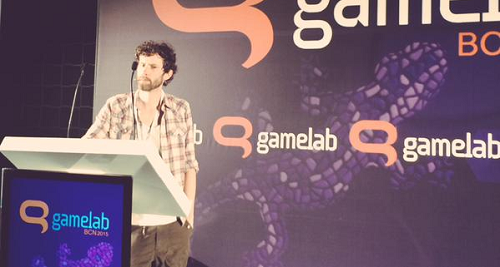
Recently I gave a little talk to games dev audiences at Subotron in Vienna, and Gamelab in Barcelona. The idea of the talk was to first establish some strong design rules I learnt from authors like Terry Pratchett and George Orwell - keep it simple, make it speak - and then to develop a science fiction world using those principles which might form the basis of a future game. As I did this I realised that video games were going to destroy humanity.

For those that requested it, here are the notes and attached powerpoint. For those that didn't request it, feel free to take a look, but note it's probably better live.

As always, feedback, thoughts and counter arguments very welcome.

Wednesday, 30 July 2014

How to Work With a Writer (Or a Guide to Why Your Writer is Sulking)

So the day's finally come. Your studio has been politely informed by the publisher that all successful games have a story written by a dedicated writer now and (perhaps using these tips) you've found yourself one. What now?

Not all jobs start out like this, but it's still common enough for a writer to wind up in a room full of people who have never worked with a writer before, who had no hand in hiring them, and really would quite like to get on with making their game now. I hear you. A writer's job is to understand the project's particular requirements and to support the team (some more from that perspective here).

This being said, there are also some good practices for teams engaging a writer that will make everyone's lives a lot easier. These are, of course, ideals, and subjective ones at that - not every project will be able to support all of them.

This is the guide to how to get the most out of your writer, or how to work out why they're sulking.

Know what scale of narrative your team can support, and be clear about it
Writing is not intrinsically valuable, in the context of game development. Some games are simply better without it, others are better with only a little of it. A small amount of good writing is better than a lot of bad writing. Know what you can support, and make this known to your writer at the outset so they can consider it and plan accordingly.

If you want your game to be 3D and story-driven, both you and your writer are going to have to work a lot harder to implement the narrative than if it's to be 2D and abstract. For the story to work well you need someone at the top who is overseeing every element of the experience - level design, object placement, visuals, voice work, the lot. This is your narrative designer. Now, that person might also be your writer, but they might just as well be your creative director or team lead. What matters is that someone is in that role, because otherwise you're going to end up with a bunch of disjointed elements, an incoherent narrative and a writer in a sulk.

Be aware that story is a two way enterprise
Story is rarely something that can just be bolted on at the last minute to good effect. As much as your writer should come onboard and work towards the framework you have, some give and take will make for a more cohesive product. Yes, your writer could bend over backwards to shape the story to your every specification - but absolute rigidity here due to schedule or budget or whatever is just going to close off fruitful avenues.

Of course, sometimes budget or schedule does force the issue. That's fine, it happens - but in those cases it's extra important that you be clear with your writer from the get go what those restrictions are so they can do their best within them (or flat out turn you down if it's completely bonkers). No one wants a sulking writer.

The more fluid the story development, the better
It's an unfortunate fact that often enough good stories are developed in a quite different order to how many studios order their internal development. In level design, for instance, altering the layout of one level needn't have repercussions for the layout of other areas. You can happily design the big budget levels and art assets , sign off on them, then rehash the intro. 

In story, rehashing one scene can have radical impacts on others. In fact, redrafting is central to producing a strong story. This is the reason that the fear of god will come over your writer when you start talking about building the pivotal scene for your vertical slice, before you finish planning the main plot arch. Any section of the story that's locked down early is like a tetris piece that doesn't dissolve. You can work around it, but that high score will be much further away. For these reasons you'll get the best narrative results when you schedule development in a way that leaves story-sensitive elements as open as possible, for as long as possible. Obviously there is a balance here.

You may also want to ensure that your writer is available throughout development, so that when you make changes to the game design on the fly they can make appropriate updates to the story. Sure, you could just book your writer for two months at the start of the project to write the script and knock it off the list, but this will scare them no end. Things will change during development which will put their writing out of context, and their reputation will depend on whether or not you pick up the phone to have them correct it. Some of the work I'm most proud of has been at the end of a project, where I'm entrenched with a team doing crunch time, keeping pace with their design changes, and developing creative solutions on the fly.

Writers want to collaborate with you, not be used as a service.

Give your writer some space to write
On most of my projects I have had teams who gave me a brief and told me to ask if I needed anything. This is great because it gives me the freedom to experiment with what works, and to spend the time where I think it's needed. On some projects I have been more directly managed, and which works best is really dependent on the nature of the job. On FTL, for instance, where I'm just producing independent text events to populate particular sectors of space, I don't need space to plan or redraft because for once the kinda work I'm doing is well-suited to a factory-line approach. 

On projects where the role is more involved - a full narrative design role - it could be quite restrictive to have someone else decide what you're working on today. Sometimes designing a character will give you ideas for a dialogue scene that you just have to write while it's fresh. Sometimes you won't really know who the characters are until after you've finished the plot. Sometimes you'll just write something bad in order to get to something good. Provided your writer has a good idea of the scope of the project and the writing budget they can use some freedom to best deploy their skill set. You don't need to sit on them to make sure you hit your production deadlines, you just have to be clear with them what you need and when - and a good writer will deliver it.

Header image is from Hitbox Team's narrative design write up, which is itself a wonderful primer for how to make those big, story-driven games we talked about earlier.

You can read more about how to work with writers, including recommended rates, at the Writers' Guild of Great Britain.

Monday, 8 April 2013

How to Hire a Games Writer

It seems like I've written a bunch of stuff on how to freelance and secure jobs as a writer, but very little about the other side of that equation - how studios can go about finding and selecting writers. If anything it's perhaps the bigger open question of the two.

Writing is still a new and niche enough discipline that a majority of the people who have hired me have been hiring a writer for the very first time - and they sometimes come across me in the most roundabout of ways. So maybe you're a one-man band looking for someone to write some short dialogues; maybe you're a producer on a AAA tasked with finding a narrative designer. Where do you start?


Where to Look for Writers
Most developers probably know and have worked with numerous freelance programmers, artists and musicians - but if you're hiring a writer for the first time, where should you look?

Online Databases
There are a bunch of sites which allow freelancers of all kinds to upload their details for your perusal, like this one. These are often hit and miss - some are out of date, most have no curation, and many still don't have a separate category for writers. Still, they're usually free for everyone, and a LinkedIn search is never a bad idea. You could also check out local writers' guilds, or the IGDA list - but at the end of the day writers have the same problems getting their names in front of you as you do finding theirs because the channels are so niche and distributed.

Recruitment Agencies
Generally recruitment firms aren't setup to deal with contract positions, but they do have large databases, including lots of writers, so it may not hurt to get in touch. There's a cost associated with advertising via a recruitment agency, but you should have the benefit of a wider reach and some degree of curation on the part of the agent. I was actually contacted by Interactive Selection the other week for a full-time position which I seriously considered, and I'd not been on their site in years, so the reach may work for you.

Writers' Agencies
An agent will represent anywhere from a couple to twenty-odd experienced writers - those ont he smaller side are often a small cabal of writers pooling their marketing resources. A good agent will have writers with guaranteed experience on their books, and be able to recommend particular people for particular jobs, provide a team of writers, or give you an opportunity to meet and assess some potentials.

The only agency with which I have any experience - and the only one I'm aware of of its size and experience - is Sidelines. It currently represents 16 writers (myself included), and frankly I was lucky to get in the door with only the Penumbra games when I did, because in their five years' operation the entry requirements have only gotten tougher. An agency will charge a small commission, which generally comes out of the writer's side.

Do Some DIY Headhunting
You might be surprised by how many games are written by freelance writers. While you can rule out a lot of AAA RPGs, games as diverse as Fable, Tomb Raider, Deus Ex and Hitman all involve freelancers one way or another. It can't hurt to get onto MobyGames, find out who did what on a game you reckon, and click through to their bio to see. Any good freelancer should have a few credits to their name and - if they're any kind of marketer - have their details filled out.

Email the IGDA Writers SIG
There are a lot of experienced writers on this list, and there are also also a lot of journalists and students. Treat accordingly.


How to Select a Writer
Once you've got some names in mind, what should you do? First, read this. That'll give you an idea for rates and standard engagements. Next you should get in touch with your shortlist and gauge their interest in the project. If they're game then - unless you've got someone whose previous work you're sure enough of not to bother - I'd suggest constructing and issuing a short writing test. I think out-of-context samples suck (at least watch a video of the game in action), and often enough the samples a writer has to hand will not sell them to their full. Samples tell you what a writer was able to do under different conditions. A bespoke test tells you what they can actually do for your project.

The test should ask the candidate to write according to a brief in keeping with the project, and should test each of the disciplines required for the role (eg dialogue writing, character design, prose, dialogue trees etc). For a short engagement ( less than 10 days), I'd say a few hundred words is reasonable. For a larger project you should probably stretch to a couple of thousand.

There is a general consensus between the agencies and writing guilds that writers should be paid for the time they spend on tests. I suppose there would be. The reality is that we're often not, and personally I will always take the chance to do a test for a game I'm interested in, whether it's paid or not. If you can afford it, or if you're asking for a big chunk of work, or multiple meetings / submissions then we certainly appreciate it. If not then don't let it put you off.

If you're not sure how to go about constructing the test and you don't have another writer on hand to do it for you, either give your candidate what they need to know about the game and let them take the lead (they should be more than capable of doing so) or get in touch with me.

Finally, get experienced second opinions on the tests. If possible meet your candidates in person, or over Skype. Make a call.

That's it. You've got yourself a writer.

Sunday, 10 February 2013

How I Got my First Job - Penumbra: Overture

Here's laziness for you. By far and away the most common question I'm asked by aspiring writers - after 'How do you be a games writer?' - is 'How did you get your first job?'. As much as I love hearing from and helping aspiring writers where I can, perhaps this post can save us all some time that we can then spend on nice things like writing tests, and reading RPS.

I got my first job, as narrative designer on Penumbra: Overture, at the end of 2006. I was 22, and halfway through an English & Philosophy BA at Southampton. I'd been reading books, playing games and writing stories for as long as I could remember. I'd been in the habit of sending sporadic bursts of emails to UK devs - at first looking for work experience (I didn't get any), then for entry-level QA and production jobs, which landed me a Summer's work at Lionhead on Black & White 2 the previous year. I don't know what spurred me to to switch from applying for actual jobs that existed to fantasy writing jobs that I figured should exist, but post-Lionhead I decided the smartest route into the industry was as a writer. After all, I was actually in the process of getting a qualification that would support my applications, and I already knew rather more about writing than I did about production or level design. Youthful naivety can be a valuable resource.

I recall one thing that happened at Lionhead while I was there that might have triggered my shift in focus. A few months before release a bunch of the other QA guys got together and wrote a short intro script that would frame the gameplay of B&W2 in a way more consistent with the mythology of the first. Frankly it was needed - any semblance of narrative progress that existed in the first game had largely been stripped out of the combat-oriented sequel, and it really didn't make much sense. In the end the idea didn't even get as far as being vetted - we'd hit text lock weeks earlier - but the image stayed with me. I realised that if Lionhead was approaching writing in so haphazard a way then maybe even a writer of my mediocrity could make a difference.

Luckily enough the indie game revolution was well under way by now. For the first time that I could remember the games I wanted to play weren't in the hands of the big corporations - everyone was doing it. Suddenly the people making the games were as inexperienced as I was. I started emailing small studios, new studios, eastern European studios... anyone doing something interesting that might be able to make use of a writer. No one replied.

And then I sent this email:

> Dear Penumbra,
>
> First of all, many congratulations on Penumbra - the physics based
> interaction interface is so intuitive it's a wonder it hasn't been done
> before.
>
> I read that you are embarking on a commercial project, and I wish you
> all the best with this, and wish to offer my services.
>
   The area that interested me particularly was the potential of the
> narrative to further enhance the atmosphere.  It's a promising start, but I
> think there's so much more that could be done with the actual
> implementation of the narrative, from the introduction, to the item
> descriptions, to the character's internal narrative during the game.
>
> I realise that Penumbra is currently a tech demo: obviously you have
> plans for the commercial release.  If you are currently looking for
> publisher financing, however, I would imagine that the tech demo is
> your greatest tool of persuasion, and as such, it would benefit from
> being as polished as it possibly can be.
>
> I am a UK based writer with a keen interest in the future of narrative
> based video gaming.  I have had a play with the config file for
> Penumbra, and I see that it is very easy to adapt in-game text, and I
> would love the chance to help write a more stream-lined, more engaging
> script and narrative for Penumbra.
>
> In case you are interested, I enclose below a re-imaging of the
> original introductory text, to demonstrate what can be done with the
> material.  If you enjoy it, please do contact me at the email provided.
>
> Yours sincerely,
>
> Tom Jubert

Despite addressing the email to the name of the game rather than the team, Frictional responded and offered me a volunteer position on the commercial project, with an unspecified offer of royalties on release.

And that is the story of how I got my first job.

Saturday, 21 July 2012

ir/rational Redux - Postmortem

My word. It's done better than I expected.  In under a fortnight...

  • ir/rational Redux is just about to hit 100,000 plays on Newgrounds
  • 300,000 plays web-wide
  • 4.11/5 stars user rating on Newgrounds
  • 6th highest scoring game this month
  • 40 pages of user reviews and comments


Play Session Stats
But let's look at some play stats rather than a bunch of self-congratulatory ones. Just under 50% of everyone is quitting out in 1-5 minutes. This sounds high, but doesn't particularly surprise me - I know the second I saw a massive page of text in a Flash game I'd consider quitting out; and if you make it past that to the second or third puzzle you're going to realise quickly enough whether or not the game's for you.

Once past the 5 minute barrier, though, there's a dip in the drop out rate and if you stay longer than 5 minutes chances are you'll stay longer than 10 too. I've got you hooked.

The average playtime for those that play past the first couple of puzzles is 15m-26m. This is great, because it means most people who play on, finish the game, or at least spend 20 minutes trying and then rage quit on level 7 or level 9 (difficulty spikes, bad design).

- 28% of everyone who lasts more than 5 minutes spends more than half an hour playing the game.
- 3% of the same take about an hour.

This are invaluable numbers when it comes to thinking about what's next for the concept. The biggest and most obvious hurdle is this - when you can't just adjust a value and give the bad guys twice as much HP, how do you manage the difficulty curve for a game which takes some people ten minutes, and some people 5x that?


Flash Marketing
I've learnt very quickly about flash game marketing during the last fortnight. Reddit is your friend, lover and guardian angel. My day 1 post on there - no doubt aided by my shameless credit name-dropping - immediately put me about 10,000 clicks ahead of everything else on the site. This in turn got me a daily prize and into the Hot New Games list. The clicks and good reviews I scored from there got me onto the front page. I'm now off the front page and the hot new games - and clicks have dropped off quickly - but the game should pick up again any day when it makes it onto the Best Games This Month list.

Netting some good website write-ups helped, especially when they came in the first week. Due to the way the portals feature games, you're better off with 50,000 plays in week 1 than with the same (or even more) spread out over a number of weeks.
"[I]t contains nifty logic puzzles, darkly amusing writing from Penumbra scribe Tom Jubert and has been reduxed so hard it looks and sounds brand new."Rock, Paper Shotgun 
"No doubt the central premise of ir/rational Redux could have come off as incredibly dry, but overall this is a supremely engaging work. A unique brand of dark philosophical humor is present throughout, and the puzzles manage the right balance of posing a challenge to advanced logicians, while remaining welcoming to the novice."JayIsGames
"The conclusions you have to reach are sometimes obvious, but the challenge of the game is figuring out how to reach them. While the game does take a brief, stupid side turn into the politics of video game censorship, most of the puzzles are amusingly high-minded."
Gameological 
"I can guarantee you've never played a puzzle or escape the room type flash game like this before so you are in for a treat."
FlashMush
A special shout out also needs to be made to Jay of JayIsGames for buying me the full version of the Clickteam game maker package so I could release the game unbranded. Massive compliment - that man knows his flash.


What I Learnt About Designing Games
(Or a list of all the crap I did wrong)

Difficulty & Designing Logic Puzzles
I approached the puzzles from the wrong direction. I started with a story, and tried to come up with logic puzzles that fed into it. As a result they feel crowbarred in - while they sit nicely with the story, the difficulty curve is all over the place, and worse: what makes those puzzles difficult is the way I've programmed the solutions, rather than the logic itself.

In the next game I'll begin with the logic, building complexity slowly, and set the game in a scenario more flexible in the opportunities it provides for puzzles.

Art is Important
I know, obvious, but I've been genuinely surprised by how polished people are finding the game - because behind the scenes, of course, it's all over the place. What's key here is this: this is essentially the same game I released three years ago, only with pretty pictures. The difference in response, though, has been massive. Good art is important.

How to do Flash Right
I've learnt a bit about the nitty gritty of Flash development as well. Don't get me wrong - I know nothing about Flash itself, but I know a bit more about alpha transparency and file compression and in-game ads and analytics. 
  • I know how to make a Flash game that's less than 18MB now (use as little alpha transparency as possible, use a non-lossy image format, don't store your text as image files, compress everything!). I also know you can make a successful Flash game at more than 5x the usual file size.
  • Implement Mochi for ads and analytics
  • Don't release buggy games
  • Don't use drag and drop software unless you really can't program (in which case do use it)
  • Do come up with a great idea and implement it to at least a mediocre standard.
  • KISS: Keep It Simple, Stupid.

And What I Learnt About ir/rational as a Concept
The single most positive part of this whole experience is the sheer volume of player discussion and feedback. There is something fundamentally strong about this gameplay concept - it makes people feel smart, and it makes people want to talk about the game. I'm certain it's performing far better than it otherwise would simply because people are talking about it so much. On Newgrounds there are games with 3x as many plays as ir/rational, but with less than half as many comments. This game is a viral marketing gift. End of.

The other thing that players are really appreciating is the originality of the thing. I remember being in my early teens and discovering PCGamer magazine, and a new value in games: 'innovation'. Nowadays it feels a bit old hat to talk about it, but if I had a penny for every review along the lines of "I've never played anything like this, 5 stars" I'd have... well, more than the $100 dollars the ads have earned so far. There's a lot of clones and fluff on Flash portals - doing something smart and different picks you out from the crowd, even if you don't implement it that well.


What's Next?
I'm currently working on a development of the ir/rational DLC concept. Only very different. I'll know if it's going anywhere in a month or two.

You can play ir/rational at these fine places:
Newgrounds
JayIsGames
Kongregate

Sunday, 28 August 2011

'GAMESbrief: Traditional Games, Transition and the Power of the Free' is a Book I Helped Write

One of many differences between Plot is Gameplay's Bitch and GAMESbrief is that GAMESbrief sells books with intelligent, marketing-led headers like:

"Buy GAMESbrief Unplugged Volume 2 for 40% off"

GAMESbrief also doesn't having swearing in its name.

At any rate, GAMESbrief is an industry analyst blog run by industry analyst, Nicholas Lovell. We used to work together for GameShadow, and I sometimes write stuff for his blog. Sometimes that stuff gets polished, supplemented and printed up in a lovely coffee table book called GAMESbrief Unplugged.

In the words of its author, Vol.2 features 'lots of insight from you', where 'you' is referring to me. Also:

  • If you want to know what really happened at Realtime Worlds, and how to avoid the same thing happening to you, you need to read this book.
  • If you want to understand what role publishers and retailers will play in the future of the games industry, you need to read this book.
  • If you want to be prepared for the next decade in a fast-changing games industry, you need to read this book.

So, that's enough shameless plugging for one month. Go buy for anywhere from £8.97 - £60.

Wednesday, 27 July 2011

What Games Would You Recommend a Non-Gamer?


I was contacted recently by a professional writer from outside the industry who was interested in exploring interactive narrative for the first time. She asked for my professional opinion on a few games I could recommend as a good starting point. Rather than actually, you know, do that, I thought I'd open up the discussion because it's an interesting one.

What games would actually hold up on a narrative level to someone who isn't so accustomed to the sort of suspension of disbelief that's unique to games? We're all very used to ignoring things like repeated lines, dodgy voice, inexpressive animation, objective exposition and finding interesting features in space marine stories; but compared to film these features must appear very stilted and amateur (with which I don't have a problem).

So a game to recommend would have to deliver a story which ideally minimises these issues, and gameplay which is comprehensible to someone not already fluent in WASD and stick-to-cover. Most importantly it would have to demonstrate our relative unique strengths (ie interaction).

My temptation, of course, is to approach this with a kind of gaming cannon - Elite, Thief, Planescape etc - but of course the antiquity of these games would deter many modern gamers, let alone an outsider.

Here's Talaya's request in her own words:
"I wondered, if you had a minute, if you could suggest two
or three (or even four) games to introduce the world of gaming to a
non-gamer -- (new games, old games, anything.)  It'd be great to have
a starting point from a professional game writer."
Here are some starting points from my end.

Braid - Explore your past experiences and relationships a-chronologically. Braid's a platformer that draws on Mario's ubiquity but marries that formula with inventive time manipulation gameplay mechanics that reflect on the somewhat obscure, but certainly ambitiously poetic narrative.

Echo Bazaar - Enter a twisted, alternate version of Victorian London. This is a web MMORPG (a game based around character progression in a persistent online world) which doesn't particularly innovate on a mechanical level, but which does employ engaging, inventive fantasy writing as an absolutely central selling point in its world design.

Dinner Date or Dear Esther - Strange bedfellows, I know. Both are short narrative experiences in which the player's actions simply shape his experience of the same broadly linear narrative. Dinner Date is dialogue heavy and sees your character sink into his own psychoses as he awaits the girl who's never coming round. Dear Esther sees you exploring a deserted island where the environment is the greatest dramatic force in play.

Portal 1 - Explore a largely abandoned research facility run by a psychotic robot lady. Yep, this one's a mainstream game. This is the most polished, most complete and most traditional offering here. It's a character study and dark comedy before anything else; but it's also one of the best and most accessible puzzle games ever made. It's also, however, the most game-y game here: you'll need to learn some basic gamer skills like 3D aiming and quick reactions to get a handle on it. Incidentally, Portal 2 is probably more accessible and more polished, but for my money Portal 1's minimal / isolationist narrative is far more interesting.

Heavy Rain - Heavy Rain is very much a made for TV movie, a cliche murder mystery. What it lacks in dramatic quality, though, it makes up for in accessibility, polish and interactive narrative involvement. I almost didn't list it because much of it is somewhat embarrassing: the write-by-numbers structure and the (arguable) misogyny. However, as an accessible experience that puts interactive drama at its centre there are few alternatives that seem more likely to engage a non-gamer.

Everyday The Same Dream - A simply presented 2D adventure expressing a common theme: the monotony and meaninglessness of life. This game uses all the tools at its disposal expertly: its simple score, monotone graphics, faceless avatars and intelligent use of colour all work towards the game's central trick: the use of video game objectives and the requirement they be unlearnt in order to reach the end. It's a simple example of how a familiar theme can be expressed in an entirely new way to provide engagement with the material impossible in any other medium.

But this post isn't about what I think. What would you recommend Talaya or anyone else looking to get involved with our medium?

Thursday, 2 June 2011

Workshop: Interactive Narrative for Screenwriters @ Birkbeck College

This Saturday I've been asked to hold a day's workshop for screenwriting students on writing for games. It's being held at Birkbeck College, London, from 10am - 4pm, tickets open to the public, and the official blurb goes something like this:
"In this one-day workshop, you will evaluate existing games from a scriptwriting point of view and learn how new games are developed. You will also gain insight into the games industry and the potential for freelance or retained work within it. You will do practical scriptwriting exercises both individually and in groups, and will receive tutor feedback on these."
Strangely the one thing it doesn't mention is who's running it which (regardless of whether you think I'm an experienced narrative designer, or a small chap with a big mouth) seems like the single most important detail. Anyway, it's not super cheap at £70 (£40 concessions), but apparently not as expensive as they come at Birkbeck either. Assuming the university doesn't change its tune on profit sharing it's probably the first and last year I'll be running it (UK universities are run like businesses, but still cling to the guidelines when it comes to actually paying people), but that's not to say if it's a success I might not take the format elsewhere.

That format's as follows:

10am – Kick off
10:20am – How are games different?
10:50am – Write something: be innovative
11:15am – Game script examples
11:35am – Break
11:45am – Approaches to story
12:15pm – Lunch
1pm – Write something: HTML dialogue trees
1:45pm – Learning from indie games
2.15pm – Write something: more HTML dialogue trees
2:30pm – Break
2:40pm - How to get a job
3pm - Show off something: HTML dialogue trees
3:40pm – Questions
4pm – Pub

I feel a touch uncomfortable encouraging people to take up these things, just like I sometimes feel uncomfortable teaching at Southbank. The hard truth is that for 80% of takers the most valuable thing to do would probably be to tell them to give up now rather than sowing false hope, and for the other 20% there's a long uphill struggle that I can only nudge them towards. The flip side of the coin is that anyone should have the right to pay for anything, including education, and who am I to decide who can't?

So. There's your disclaimer, and here's your ticket link. Hooray!

Tuesday, 17 May 2011

Get Your Writing Resources and Script Samples here!

Check out the new Narrative Design Resource

Today means I've been operating this blog for over a year. It took me a long time to get to the point where I felt like I might have something to say worth blogging, and it's something I continue to question. To all of my regular commenters, my lurkers (do say hello), and everyone who's expressed an interest in person - thanks for reminding me that sometimes I do. Sometimes.

Right, that's enough suck-up, self-congratulatory stuff for one year. Let's look at what we need to work on.

Thanks to a friendly link from RPS a year ago things took off quickly at Plot is Gameplay's Bitch. So quickly, in fact, that it took about six months for my unique visitors to reach that peak again. We're now trolling steadily along at around 3,000 - 4,000 uniques a month, except each time RPS links over here and we shoot up to about 10,000 and crash the server. Thanks guys :-)

I really want to drive the site into being a primary resource for interactive narrative theory and discussion. With that in mind I'm out collecting interviews and guest posts to boost the content - if you're someone you think I'd like and you're keen, do get in touch - and looking into ways to make the core theory content more immediately accessible.

The interim result is the new Narrative Design Resource. It's full of script samples, development documentation, advice and useful links. Do let me know your thoughts.

To close us off, here are a few of my early favourites that you might have missed.

http://tom-jubert.blogspot.com/2010/05/writing-for-indie-games-or-how-to.html
http://tom-jubert.blogspot.com/2010/06/fantastic-gonzo-games-fringe-piece.html
http://tom-jubert.blogspot.com/2010/06/spelunky-review-sort-of.html
http://tom-jubert.blogspot.com/2010/08/my-games-my-games-what-i-did-on-which.html
http://tom-jubert.blogspot.com/2010/12/stories-in-unlikely-places-no2-tribes.html

Monday, 4 April 2011

How to be a Good Freelancer

This post originally went up at GAMESbrief to promote their new freelancer database.

Sorry for the header.

In promotion of his new freelancer database, Nicholas Lovell asked me to share what I know about freelancing for anyone who's maybe looking to make the shift. I've been contracting as a games writer for almost five years, and relying on it as my main source of income for the latter half of that time. Over the years it's more often than not been running a good business - rather than any direct correlation between ability and job offers - that's kept me in work.

Securing Work
- Network. I'm not going to repeat all the usual advice. You know how to network. A lot of the jobs aren't sitting on bulletin boards; they're sitting in the bar waiting for you to buy them a pint and tell them about the fascinating / appalling lecture you've just seen. I'm also going to include obvious stuff here like get your name out there, maintain a professional website, blog etc.

- Research standard industry rates for your services, and be confident pitching them (ideally only once you've seen a full brief for the project). Be prepared to engage in and even encourage negotiation. In my experience many devs don't always bother; whether that's a business etiquette thing or a case of it being easier just to get quotes from a bunch of freelancers and chose the best, I don't know. Either way it's a shame, because very few of us are in this industry to make our millions: usually if someone comes to me with a project I want to work on we're able to find a rate and schedule that keeps everyone happy.

- Always meet face to face as soon as possible. There's no great psychology in observing that people form better connections when they've sat in a room together complaining about the red ring of death for half an hour while the tech department finds a new Xbox.

- Stay in touch. Develop an address book of people who might send work your way (either now or in new roles in the future, ie almost everyone). If you publish a new game, start a relevant new endeavour, or have anything valuable to say, send them a note. I wouldn't do this more than a few times a year, if that - spam is bad - but lots of people will hopefully consider you a genuinely valuable contact, even if they don't necessarily send you a fantastic job immediately.

On the job
- Under promise, over deliver. It's an old freelancer thing, but it'll save you being the dreaded British builder who always winds up charging 100% more than he quoted. Adjust your guarentees against how good you are at estimating workloads. You'll have to use judgement on when a client is looking for a lower quote, but most of the time if you can develop a reputation for delivering on time, and even early, you're golden.

- Find the balance between the client's expectations and your own expertise. What you think the audience wants and what the client thinks don't always coincide. You've been hired to do what you're told, certainly, but you've also been hired to make their game as strong as you possibly can. Learn to let go of the small battles, justify your decisions when you hold your ground, and be prepared to be overruled without losing the smile. You're all on the same team.

Finally, always keep the producer happy. Always, always deliver on time. Stay one step ahead of the needs of the developer. Stay in contact as much as possible. The company hires you because you make life easier: they get to know what they're getting, when they're getting it and how much it's going to cost. You probably cost more than an in-house equivalent would, so you're the one guy who can't get away with deadline slippage. Producers are often overworked. They have a dozen other freelancers like you to manage. If you're the one guy they never have to hassle over a deadline they're going to hire you again.

Monday, 14 March 2011

10 Tips on How to Become a Professional Games Writer

It's the number one question we get asked. We talk about it in panels, in classes, in interviews, and in the pub. Even assuming you're remarkably talented and know everything that's everything about games, you're facing long odds - but you know that already. I don't claim to be any kind of expert at 'getting in' - after all, I've only done it the once - but for what it's worth, here's the definitive guide as I see it to becoming a professional narrative designer.

1. Be a remarkably talented writer. Frankly, like me, you could get away with being competent with a bit of personal flair, provided you also have a bit of luck and know games inside out. But if you're a naff writer - if you've not written for yourself, or braved honest critique with your work - that's your first stumbling block. Being fantastic will help lots.

2. Understand games. Playing lots of shooters probably isn't enough. You've got to think about games critically as any developer would - that's what makes you a narrative designer, not just a hired hack.

3. To those ends, play lots of games, read lots of books. Think about them. Write about them.

4. Keep trying, take anything, try everything. Build an indie game, write for a mod, write reviews, email devs, work in QA, build a portfolio.

5. Network. Doesn't matter what route you come into the business through, getting jobs - particularly writing jobs - isn't always a case of seeing an ad and sending in your CV. Go to events, buy people beer, bum a cigarette, blog, twitter, remind people you exist.

6. Network. Seriously. 70% of my work comes through networking and repeat custom. The rest is through my fabulous agency (who, I'm afraid, only consider established professionals). Can you guess how I got in touch with my fabulous agency? Networking.

The routes in... 
7. Be a professional writer in another medium. Sounds like a big ask, but look at it this way: every medium other than games is better equipped to recognise and reward writing talent. Books and comics in particular are far lower cost, and have more releases every year - and therefore have more demand for good writing. It'll still require excellent networking to make the switch, though.

8. Move roles within the games industry. Entry level positions in production, level design and QA are all realistic goals for a talented writer and, with some careful planning and a constant eye on opportunities within the company, can be converted into a writing role - either over time by picking up basic writing responsibilities, or as a direct move. Do note, though, that telling your seasoned QA manager that you're only there to get a 'proper job' is most likely a poor idea.

9. Get in with the indies. This was my route. Working on something amateur is very easy to get into (by comparison to, say, writing a novel). Do it enough and one of them might turn pro. Congrats - you've got your first professional writing credit! Now go network!

10. Learn from my mistakes.
DO email loads of devs (ideally smaller ones in less established territories like eastern Europe) out of the blue telling them how much you love their games (if you do) and how you think you can help. I must have sent hundreds of prospective mails before I got my break on Penumbra.

DON'T piss people off with spam.

DO keep trying.

DON'T keep trying if everyone (even your mum) tells you your writing is shit. It probably is. Play to your strengths.

DO realise that being a video game writer is one of the most sought after jobs on the planet because it's one of the most amazing jobs on the planet.

DON'T forget that if you're a fantastic writer you're already ahead of 90% of your competition.

***UPDATE 2***
This post remains the most hit page of this blog, so I can only figure a lot of you are landing here from google searches and whatnot. Hello, I'm Tom.

If you'd like more help and resources on how to get into this line of work do leave me a comment down below and I'll get back to you. I also recommend you check out the list of narrative design resources (design docs etc) listed on this very site!

You may also find some of the other posts on this blog of use. Some good places to start are the Development and Advice tags.

***UPDATE***
I went to a BAFTA games writing event recently at the ICA to have a meeting with my agent and Charles Cecil, and met a chap from the drama industry looking to break into games. I wrote him out some good places to start looking for small indie teams and while I'm sure a lot of my readers will be familiar with these already, they may prove useful for anyone referring back here in the future.

http://forums.tigsource.com/index.php Indie dev forums with lots of work-in-progress and volunteer request threads. Just be aware that most are ludicrous pipe dreams; steer clear of the one-man-MMOs.

http://www.gamasutra.com/jobs/ I've seen the odd small / cheap writing job go up on these boards, worth posting a profile at any rate.

http://www.moddb.com/ Home of work-in-progress mod projects, some really good stuff here.

http://www.igf.com/ Competition for the very best indies, should give you a picture of who's big at the mo.