Showing posts with label Unlikely places. Show all posts

Monday, 28 January 2013

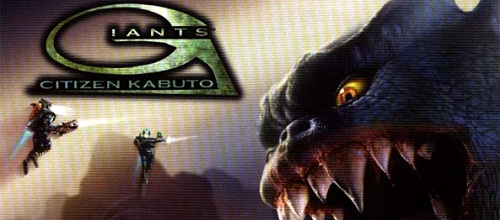
Stories in Unlikely Places: Giants: Citizen Kabuto

Good comedy games - small list. Good comedy games that aren't adventures - smaller list. Toward the top of it, though, nestled just next door to Psychonauts, is Giants: Citizen Kabuto. I won't commit to which takes the biscuit, but I will suggest that of the two, Giants is the game that carries its comic ideals right to the heart of its design ethos.

Founded by a bunch of ex-Shiny chaps and very much carrying the mantle of that studio's deranged comic styling, Giants was an incredible game of open world combat, lush tropical visuals and cockney aliens. It's a game of vastly disparate ingredients, united by Planet Moon's refusal to consign its boundless imagination and comic juxtaposition to the cutscenes alone.

You start out Giants playing as a crew of cockney aliens crash-landed on an alien planet on their way to Planet Majorca. It's an immediately ridiculous scenario in which to frame the subsequent island-hopping action. Once you're introduced to local boy 'My name is Ahmed, but call me Timmy' you'll never look back.

You won't spoil things too much by checking out the first few minutes of cutscenes below.


The levels that follow excel in mixing up conventions. Sure, a large part of this game is going places and shooting dudes, but the team at Planet Moon obviously relished finding ways to disguise that fact. In the second mission you get a jetpack and have to rescue dangling Smarties (the comically disfigured locals), and this was long before the likes of Just Cause gave us similar freedom. It's worth noting, too, that as good as that franchise looks now, Giants looked back in 2000.

As the game progresses - always interspersed with those fantastic cutscenes - your objectives are messed about with. One minute you're planting a bomb in an enemy camp, the next you're hunting Vimps (cow-bug things) for meat, the next you're knee deep in the base building game. Yes, there's even a relatively fleshed out RTS in here, which forms the cornerstone of the benchmark multiplayer mode. Every one of these elements is considered, presented with flair, and imaginative in ways it's hard to comprehend in these homogeneous times. The multiplayer standing alone would have had an impact - it was 8 player, non-symmetric teamplay with base building and Vimp hunting and a giant bloody Kabuto running about eating people. And it was 2 years before Natural Selection.

To put it in soundbite form, Giants is a game that reminds me how lazy the likes of GTA and The Elder Scrolls really are with their mission design - and how much more attention, variety and contextual detail we as players have a right to demand.

So you play on, and it's true - some of the levels become a little repetitive - but then you leave the Meccs behind and become a Sea Reaper. Suddenly the waters - which as a Mecc mean death by piranha - become the shadows you stalk through before you strike. You're able to move in ways that entirely change the game, and to overcome the hordes of enemies, that for the Meccs were becoming overwhelming, with precision and flair. You also have your boobs out which is again bucking convention, if nothing else.

All the time your objectives are being framed in ways that make sense. Gameplay rarely devolves into something that feels familiar. You're looking forward to the next joke, or the next time Planet Moon are going take you completely by surprise. Surely they're not going to let me do that?!

Playing it again now, it's naturally not as pretty - but it still has the charm. The timing is off in some of the cutscenes - Psychonauts comes up trumps for sheer polish and consistency - but I feel closer to these characters and, perversely for such an off the wall tale, the story itself. The world feels like a real place, and there's a darker tone to the game than the cartoony visuals suggest. From the grotesque design of the Smarties' physical features, to feeding children to giants, to the tensions between the different species, there's an edge here that keeps the game from feeling flat.

There's also the bit where you play as the giant, which was rubbish even at the time. Ignore that bit.

Planet Moon released one game of interest after Giants, Armed & Dangerous, before hitting financial woes, switching to smaller, licensed projects and finally being subsumed into Bigpoint. A&D retained the feel of Giants, but lacked the spark of invention (though it did come up with the shark gun long before it rose to fame in the latest Saints Row). Comparing the two games is nonetheless a fruitful engagement - doing so demonstrates just how much more is going on in Giants than gameplay + funny cutscenes.

Giants is a must play. You can get it from GOG for $9.99 (I make no money from sending you there).

Thursday, 17 November 2011

Stories in Ulikely Places: SWAT 4

Why is SWAT 4 the singleplayer game I've replayed more than any other (ie three times)? Why does it still give me the warm sense that something somewhere is right in the world (or at least was back in 2005)? Why this despite the fact my men are unable to equip anything more lethal than a paintball gun?

At the core of SWAT 4 is as rigorously designed a gameloop as you'll ever come across. Enter a plausibly detailed, open layout environment (anywhere from a petrol station to a halfway house to someone's house) with your four AI squaddies. Find a door, check what's on the other side with the look-under-the-door / magic wand gizmo, choose an appropriate tactic and storm in. Kill/arrest baddies, secure civvies and weapons, report status, rinse repeat.

The game gets a few key things really right.

Sense of Place
I enter the dining room in the halfway house. It's a large, open hall designed to feed people en masse; I have good visibility compared to the segregated cubicles of the office building I've come from, but the size of the room means a single grenade won't cut it. I order Blue team to breach from the other entry point to cover more ground.

I love games that make me feel like I'm in a real place that affects the way I play, rather than just a series of room and corridors with different body paint to run through. Think Hitman, think Thief, think Project IGI. SWAT 4 gets half of this right - while an office block doesn't make gas grenades any less effective, we are at least encouraged to take the context onboard and appreciate the bubble narrative of each level. From mission briefings and 911 calls to believable level geometry and visual detail, Irrational did their utmost to bring you into the gameworld in a way far more effective (for me) than a Half-Life 2 or Deux Ex 3. These are all locations we're familiar with and - to a degree - predict; they feel like part of a larger world rather than a themed rollercoaster, and for SWAT that's all important.


Sense of Role
The team bursts into the dining room, the pointman reporting one armed suspect and one civilian. The suspect stares at us in shock, his weapon resting uneasily by his side. I scream at him to drop the weapon, knowing I'm the only one with an itchy enough trigger finger to pop him before he poses a threat. He drops the gun, goes to kneel down, then draws a sidearm. I shoot him in the face, which spooks the hostage, and I'm forced to have my team subdue her. Situation under control I have them both arrested and report the outcome to TOC.

SWAT 4 is, I can only assume, not very realistic in any sense but the aesthetic. This being said, it remains more realistic-feeling than just about any military shooter bar some of the older OpFlashes and Rainbow Sixes. The challenge in SWAT (at difficulties beyond normal) is not to kill all the baddies - that's easy - it's to follow procedure without letting procedure get in the way of killing the baddies. It's not quite the way it's presented, but effectively you start out with 100 points, and they're detracted for every red tape slip up.

Kill a guy when you could have arrested him: -2 points
Fail to secure a weapon or report a kill/arrest/casualty: -2 points
Shoot a guy who didn't point his gun at you: -5 points
Execute an arrested criminal: -10 points
Execute one of your teammates (even by accident): death by impromptu firing squad

It sounds petty, and it can be, particularly when the game's age (and that period's lesser focus on accessibility) sees your final objective being to rescour an empty level looking for the one handgun you forgot to collect. For the most part, though, it's a stern reminder that you're not a lawless one man army. You're a guy (a faceless, characterless guy, but a guy nonetheless) with a boss, and a job, and the expectations that come with. It feels like I'm part of a system rather than the one guy allowed to break it. That's a good thing, even if it means I have to arm my chaps with paintball guns to stop them killing dudes.


Sense of Tactical Play
I stack my men up on the next door and order a breach, bang & clear. Red One opens the door and Red Two slings a flashbang. I call up the Blue One camera and watch from first person as he makes entry and scans the room, Blue Two passing his peripheral as he heads in deeper.

SWAT 4's gameloop is, ultimately, about assessing your situation, selecting tactics, breaching a room and then making a series of quick-fire decisions. This is all supported by a remarkably intuitive order system that allows quick and (when the AI isn't getting all 2005 on your arse) effective coordination of your team that's further strengthened by the animation. It's indescribably satisfying to watch the fluid machine of your squad in motion.

Truth is, tactics are more limited than they appear. The differences between the flash, gas and pellet grenades is rarely vital (are the threats wearing gas masks? is there clear line of sight?), pincer moves are often more dangerous than single attacks, and additional flavours like pre-mission loadouts and entry points similarly cursory. The combination, though, is palpable. Just like the original, top down Rainbow Six, there's the sense of a well-ordered plan that could go wrong at any moment, and an excruciating tension. The latter is, if anything, only added to by the knowledge that hearing your guys yelling to "Get down!" means there's a 50:50 chance their overly steady trigger fingers will be slower than the suspects'; unless, that is, you can get there in time. In fact, unless grenades are wisely used in incapacitating your foes your four-strong team is easily matched by a single aggressive crim.


All Told
I stack my team up on the door and loop around to the connecting room; anyone in this second room could easily avoid a grenade blast and flank my chaps. I signal them to go, hear the bang, and make entry myself. I blast open the door and come face to face with a perp. In my panic I shoot him in the face, as I am prone to do. Oh spacial awareness, you've bitten me again: there's one fewer room between me and my guys than I figured. As the perp falls I consider how strangely well equipped he is. By the time he lands I realise it's Red One. I eyeball the rest of my team and hammer the 'F' key to report a man down, and then hammer it some more in the hope its contextual function can also handle "Guys, it was a mistake, I'm sorry!" Someone, that uppity bastard Blue Two, I think, yells, "We've got a traitor!" and everyone shoots me. As the screen fades I hear Blue Two report to TOC that the "Situation is under control."

SWAT 4 is a game that tells engaging stories without the schoolboy reliance on a grand overarching narrative. Who says games should be about a ten hour story and not ten one hour ones? It's a game that intelligently combines scripted narrative (in the mission briefings and level layouts) with procedural content (in the random enemy positions and emergent scenarios), and presents it all through gameplay that reflects the both.

SWAT 4 is my favourite Irrational game. I can think of few higher complements than that.

Tuesday, 1 February 2011

Stories in Unlikely Places No.3: Cryostasis

Crostasis is an ambitious Ukrainian development whose limited implementation belies its thorough understanding of how to tell a creepily effective tale.

This is part of a series of posts aimed at celebrating and championing the games that further our understanding of interactive narrative. No serious spoilers.

This column thus far has found itself focusing exclusively on older games whose narratives were under appreciated when they first came to bear, so with that in mind I present you Cryostasis - a 2009, Condemned-style survival shooter that probably looks like it's not especially worth your time. The game positions you as a scientist stumbling across the wreck of a Russian nuclear research vessel grounded in the arctic, your goal being to discover just what went wrong, and why the hell everyone's a zombie now.

The first example of the metered approach to design that Action Forms applies throughout the experience is in the ranged combat: it's rubbish, but that's because this isn't really a shooter, it's an atmospheric game of exploration. Its USPs sound exciting but prove to be much more stripped down than they might have been. Modelling temperature as a crucial survival resource could have been inventive, and the moments that mirror Dead Space's haunting zero G scenes - where you fight your way out into the blizzard, surviving moment to moment on the fleeting respite of a hot air vent or partially destroyed cabin - are atmospheric and rewarding; but for the most part all this marketing talk just means the health bar's replaced with a thermometer; med kits with fires, heaters and even desk lamps.

Of greater narrative interest is the MentalEcho ability. Cryostasis builds most of its challenge around environmental puzzles, many of which revolve around the protagonist's ability to embody the mind of a dead guy, go back in time and change his actions in the past in order to effect the present. Again, this has some really inventive gameplay applications (eg posses the stuffed polar bear that's locking your path, then go back in time and save it from the captain's hunting rifle, leaving the path in the present day clear), but they're completely linear and for the most part it's 'Go back to when this guy broke this ladder and, you know, don't.' However, much like games such as Tribes: Vengeance or Second/Sight, less demanding gameplay and a more linear narrative can allow the creative wiggle room for some serious story fireworks.

Cryostasis relates three different, interrelated tales. The first is the most minimal: the active story of the protagonist. Frankly beyond the opening and the conclusion this story amounts to 'Guy trudges through boat, reads some shit.' The next is the eerie Russian fairytale of hero worship and lost faith that acts as foil to the core thread: the discovery of just what went on on the ship in the previous weeks.

These flashbacks tend to be non-interactive, you a ghostly spectator to events whose catastrophic outcomes have already unfolded. The story itself - of mutiny and fate - is nothing too out of the ordinary, but the structure is captivating: too few are the games which understand that the audience often needs a perspective broader than the confines of a corridor and gun barrel. Gradually the scraps of correspondence, scenes of tension in the crew quarters, altered histories and allegorically deformed sailors come together at a single, crucial point in time; finally a point where your actions may have an impact that reaches beyond the next locked door.

Also you fight the god of time. But that's enough of that.

The conclusion is satisfying (that alone is a rarity), delivering on all the dramatic loose ends the devs have sewn throughout the last eight hours, and even the end credits are touching and wistful for the experience you've just shared.

Not that I'd guess it was an inspiration, but there are definite Penumbra vibes at work here: the atmosphere of isolation; the focus on survival, exploration and puzzle solving; and the philosophically inspired backstory. That and the rubbish combat. The developer's site is down as of right now, and they've not been very chatty since this game's release and the formation of a phoenix dev team.

I for one would like to give this game a last breath of life.

Buy Cryostasis: Sleep of Reason at Amazon.co.uk (£6.99)
Download Cryostasis: Sleep of Reason at Amazon.com ($3.25)

Sunday, 19 December 2010

Stories in Unlikely Places No.2: Tribes: Vengeance

Tribes: Vengeance is one of the most subtly subversive multiplayer games ever made. Not a lot of people know that.

This is the second in a series of posts aimed at celebrating and championing games which don't just further the art of interactive narrative design, but do so either from unexpected places against unlikely odds, or despite their continuing obscurity. No serious spoilers.

Released in 2004, Tribes: Vengeance was a prequel, the third game in a series that was itself a spin off of Dynamix' mech-game, Earthsiege. Incidentally, that series simultaneously demonstrates that our industry is ridiculous, and constantly, brilliantly evolving. It goes...

Metaltech: Earthsiege
Earthsiege 2
Starsiege
Starsiege: Tribes
Tribes 2
Tribes: Vengenace.

I'd buy Vengeance: Metaltech any day.

But back to the point. 1998's Tribes was startlingly advanced in every sense other than the narrative one. It was a pre-1942 Battefield; the game that did huge outdoor arenas, massive player counts, and on-foot vs vehicle teamplay before anyone else had graduated beyond Quake deathmatch. It was a technical and design marvel.

But it still centered around blowing shit up.

In the hands of a pre-Bioshock Irrational - known at the time for System Shock 2 and Freedom Force - Vengeance still centered around blowing shit up, but the studio's masterstroke was to bother explaining why. With Tribes, Irrational proved beyond all doubt their ability to deliver in whatever genre they set their sights on - their vision of online carnage more than lives up to the series precedent and yet they've never returned to it - but it was the blindside of the singleplayer campaign that quietly redefined the playing field.


Vengeance pits you as five different characters on opposing sides of a space cold war, separated by generations. There are two timelines, set 20 years apart, and you play them in parallel, so the events occurring in the past give you new insight on what's going on in the present. You are simultaneously the Imperial Princess captured by the tribals, and the daughter she's yet to give birth to. The story sees the characters fall in and out of love, make and avenge any number of murders, and instigate and quell all out war.

Frankly, the writing isn't as sharp as we've rightly come to expect half a decade later:

VICTORIA
Just get on with it, you tribal dog.

DANIEL
Woof.

That's probably the best line in the first half hour. No, In case you can't tell, Vengeance stands out for me for its epic, multi-protagonist narrative structure.

We spend a lot of times in games writing bemoaning the aping of cinema; we should be our own medium with our own strengths and weaknesses. What I think a lot of games writing could learn from is dramatic structure. How often do you play an action game whose story isn't realtime? It's rare to see so much as 'Two months later...' let alone a game as bold as Vengeance. It's not that realtime is always bad, it's just indicative of a general lack of faith that we rarely try anything better suited to telling a story. Another question: how often do you play a game confident enough in its storytelling that it will keep you in the dark about huge portions of its narrative until it deems fit to bring you into the loop? Cinema has these tricks down pat, but we're still learning how to do them. Irrational pulled it off ages ago.

In Vengeance you play as both mother and daughter, and the hindsight provided by the one character renders seemingly righteous actions by the other as tragedy. And right there, there's the reason Vengeance is special: it's a tragedy. That shouldn't be a rarity, but it is. This is a game about love, and politics, and perspectivism, and hatred. It's a game which is entirely linear not because it lacks narrative ambition, but because this enables it to tell an intricately crafted story of a fashion I'd argue Bioshock never even approached. It's a game assured enough to let your motivations in the present only be explained later by your own actions in the past. Even Rockstar - in Red Dead Redemption - look amateur in their attempts at the same.

But there's something else. Let's look at the story premise again, because it's so obvious, and so smart, as to be almost invisible.

The Tribes series - and online shooters in general - have always been about people fighting one another for no real reason. How do you make a story out of that? Simple. Irrational's story is about how people fight one another for no reason. And they prove that to you. In gradual, tragic detail.

Perhaps that Vengeance was a multiplayer game whose strongest asset was its elaborate, story driven tutorial was what damned it to the insulting sales and mass exodus of players and publisher immediately following release. Perhaps Vengeance's singleplayer didn't redefine storytelling in the same way the original game did multiplayer. But it should have done.

This is a game which, if any ever did, deserves another look while its gameplay remains palatable. Because unlike its visuals, its story is timeliness.

Buy Tribes Vengeance at Amazon.co.uk
Buy Tribes Vengeance at Amazon.com

Tuesday, 26 October 2010

Stories in the Most Unlikely Places No.1: Prince of Persia: The Sands of Time

This is the first in a (potential) series of posts aimed at celebrating and championing games which don't just further the art of interactive narrative design, but do so either from unexpected places against unlikely odds, or despite their continuing obscurity. No serious spoilers.

Sands of time was shockingly good. A reboot of an ancient licence, it was handled by an internal development team who up until the previous year had been best known for the N64's Tonic Trouble, and in the six months between announcement and release screens of hack & slash combat had done little to demonstrate any sense of ambition was at play.

Writing aside for a moment, Sands of Time reinvented platforming in a way (arguably, of course) only Mario 64 and Tomb Raider had done in recent memory. The natural grace and stunning agility of the Prince's movement was both sumptuous and rewardingly challenging. Even the combat - though overused and far from nuanced - was at least satisfying in a way every iteration since has failed to grasp.

But let's talk story. That Jordan Mechner - the original PoP's youthful auteur - had only one post-Prince credit to his name has since become moot. When that game is the much-overlooked Last Express, and when his work since has included the Disney iteration of the franchise and award-winning documentary Chavez Ravine, it's easier to see why the project was such a success.

Mechner was brought on as Creative Consultant, and then Writer / Designer, and it's clear from the very first screen that the man meant to rinse the opportunity for all its worth. Unlike a mind-bogglingly large number of even contemporary releases (I'm looking at you, Bioshock) Mechner understands enough about interactive story telling to give the player control immediately, even in the framing device.

And what about that framing device? The Prince steals into Farah's bedroom and proceeds to tell hear a tale unlike any she has heard before. Every level in the game proceeds as a thread of this story, even the Game Over screen is flicked away with a casual, "Wait, that's not how it happened." By the time he finishes his story (and the player the game) we understand just what he's been through and lost, and why it's so vital she believe him.

Despite its innovative rewind mechanic (ultimately a quick-save gimmick, but one so useful and so integrated into the fantasy that the term hardly seems fair) it remains the dialogue and the characters that really mark the experience out as something special. In an industry where gruff talking space marines and broody ninja bitches continue to rule the roost the down-to-earth backtalk...
Farah
[after Farah has accidentally shot the Prince during a previous fight
You go ahead. I'll cover you!
Prince
Please don't. You're liable to hit me. 

...and resentful bitching...

Prince
I'll just ask the first Sand Creature I run into, "Could you direct me to the baths, please?" Well, thank you. "Don't mention it, I used to be a bath attendant back when I was alive... "
...remain a breath of fresh air. The relationship is plausible and fun enough (albeit in a very Hollywood fashion) to invest in, and I genuinely was made to care about the conclusion (of the story, not the inevitably rubbish boss fight) in a way few platformers have managed before or since.

It speaks volumes to the timeless quality of Mechner's writing that no sequel has achieved the same heights. Ubisoft demonstrated startling ignorance of what made the original great when they went all emo with Warrior Within - dislodging Mechner in the process - and even managed to lose much of what made the platforming so sublime in the 2008 reboot-reboot. I appreciated the return to a more likeable hero with first Andy Walsh's 2008 script and then The Forgotten Sands interquel, but it's proved too little too late.

The Sands of Time remains a very personal favourite for me, not to mention a surprise outsider. It plays as well today as it did seven years ago - but it reads even better.