You spend your whole career hoping your AAA bosses will send you to the big US shows, then a small indie game comes along and sends you to three at once. Thank you, Facepalm Games.
Yes, next week I'll be accompanying my latest indie project, The Swapper, and Olli (its Lead Designer) to PAX East, where we'll be demoing the game on the Indie Megabooth floor. The Megabooth is gargantuan as viewed through the lens of my esteem, and pretty-well filled-out by anyone's reckoning: it's the beating heart of the indie dev presence at PAX, and the people are top. Do get yourself there.
Following that we'll be flying across the country to hit GDC in San Francisco. I have helped make a game based in that town, but I have not been there, so I can't wait to find out what all these invisible walls are actually made of.
Once there I'll be accompanying the chaps from Subset Games to the IGF Awards in which FTL is nominated; and generally milling about the place going "Gosh, isn't Develop quaint." (Develop is the UK equivalent of GDC, American chums).
I'll be in the US for ten days, and throughout that time I'll also be demoing Ir/rational Investigator on iPad. Whether you're press, dev or consumer, if you fancy a play drop me a line or come find me!
I'll be at PAX East 22 - 24 March 2013, at the Facepalm Games booth.
Here's laziness for you. By far and away the most common question I'm asked by aspiring writers - after 'How do you be a games writer?' - is 'How did you get your first job?'. As much as I love hearing from and helping aspiring writers where I can, perhaps this post can save us all some time that we can then spend on nice things like writing tests, and reading RPS.
I got my first job, as narrative designer on Penumbra: Overture, at the end of 2006. I was 22, and halfway through an English & Philosophy BA at Southampton. I'd been reading books, playing games and writing stories for as long as I could remember. I'd been in the habit of sending sporadic bursts of emails to UK devs - at first looking for work experience (I didn't get any), then for entry-level QA and production jobs, which landed me a Summer's work at Lionhead on Black & White 2 the previous year. I don't know what spurred me to to switch from applying for actual jobs that existed to fantasy writing jobs that I figured should exist, but post-Lionhead I decided the smartest route into the industry was as a writer. After all, I was actually in the process of getting a qualification that would support my applications, and I already knew rather more about writing than I did about production or level design. Youthful naivety can be a valuable resource.
I recall one thing that happened at Lionhead while I was there that might have triggered my shift in focus. A few months before release a bunch of the other QA guys got together and wrote a short intro script that would frame the gameplay of B&W2 in a way more consistent with the mythology of the first. Frankly it was needed - any semblance of narrative progress that existed in the first game had largely been stripped out of the combat-oriented sequel, and it really didn't make much sense. In the end the idea didn't even get as far as being vetted - we'd hit text lock weeks earlier - but the image stayed with me. I realised that if Lionhead was approaching writing in so haphazard a way then maybe even a writer of my mediocrity could make a difference.
Luckily enough the indie game revolution was well under way by now. For the first time that I could remember the games I wanted to play weren't in the hands of the big corporations - everyone was doing it. Suddenly the people making the games were as inexperienced as I was. I started emailing small studios, new studios, eastern European studios... anyone doing something interesting that might be able to make use of a writer. No one replied.
And then I sent this email:
> Dear Penumbra,
>
> First of all, many congratulations on Penumbra - the physics based
> interaction interface is so intuitive it's a wonder it hasn't been done
> before.
>
> I read that you are embarking on a commercial project, and I wish you
> all the best with this, and wish to offer my services.
>
The area that interested me particularly was the potential of the
> narrative to further enhance the atmosphere. It's a promising start,
but I
> think there's so much more that could be done with the actual
> implementation of the narrative, from the introduction, to the item
> descriptions, to the character's internal narrative during the game.
>
> I realise that Penumbra is currently a tech demo: obviously you have
> plans for the commercial release. If you are currently looking for
> publisher financing, however, I would imagine that the tech demo is
> your greatest tool of persuasion, and as such, it would benefit from
> being as polished as it possibly can be.
>
> I am a UK
based writer with a keen interest in the future of narrative
> based video gaming. I have had a play with the config file for
> Penumbra, and I see that it is very easy to adapt in-game text, and I
> would love the chance to help write a more stream-lined, more engaging
> script and narrative for Penumbra.
>
> In case you are interested, I enclose below a re-imaging of the
> original introductory text, to demonstrate what can be done with the
> material. If you enjoy it, please do contact me at the email provided.
>
> Yours sincerely,
>
> Tom Jubert
Despite addressing the email to the name of the game rather than the team, Frictional responded and offered me a volunteer position on the commercial project, with an unspecified offer of royalties on release.
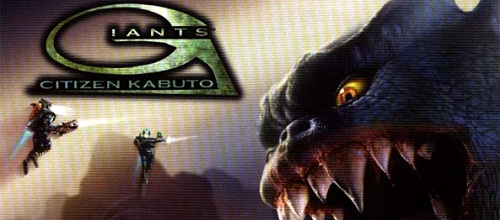
Good comedy games - small list. Good comedy games that aren't adventures - smaller list. Toward the top of it, though, nestled just next door to Psychonauts, is Giants: Citizen Kabuto. I won't commit to which takes the biscuit, but I will suggest that of the two, Giants is the game that carries its comic ideals right to the heart of its design ethos.
Founded by a bunch of ex-Shiny chaps and very much carrying the mantle of that studio's deranged comic styling, Giants was an incredible game of open world combat, lush tropical visuals and cockney aliens. It's a game of vastly disparate ingredients, united by Planet Moon's refusal to consign its boundless imagination and comic juxtaposition to the cutscenes alone.
You start out Giants playing as a crew of cockney aliens crash-landed on an alien planet on their way to Planet Majorca. It's an immediately ridiculous scenario in which to frame the subsequent island-hopping action. Once you're introduced to local boy 'My name is Ahmed, but call me Timmy' you'll never look back.
You won't spoil things too much by checking out the first few minutes of cutscenes below.
The levels that follow excel in mixing up conventions. Sure, a large part of this game is going places and shooting dudes, but the team at Planet Moon obviously relished finding ways to disguise that fact. In the second mission you get a jetpack and have to rescue dangling Smarties (the comically disfigured locals), and this was long before the likes of Just Cause gave us similar freedom. It's worth noting, too, that as good as that franchise looks now, Giants looked back in 2000.
As the game progresses - always interspersed with those fantastic cutscenes - your objectives are messed about with. One minute you're planting a bomb in an enemy camp, the next you're hunting Vimps (cow-bug things) for meat, the next you're knee deep in the base building game. Yes, there's even a relatively fleshed out RTS in here, which forms the cornerstone of the benchmark multiplayer mode. Every one of these elements is considered, presented with flair, and imaginative in ways it's hard to comprehend in these homogeneous times. The multiplayer standing alone would have had an impact - it was 8 player, non-symmetric teamplay with base building and Vimp hunting and a giant bloody Kabuto running about eating people. And it was 2 years before Natural Selection.
To put it in soundbite form, Giants is a game that reminds me how lazy the likes of GTA and The Elder Scrolls really are with their mission design - and how much more attention, variety and contextual detail we as players have a right to demand.
So you play on, and it's true - some of the levels become a little repetitive - but then you leave the Meccs behind and become a Sea Reaper. Suddenly the waters - which as a Mecc mean death by piranha - become the shadows you stalk through before you strike. You're able to move in ways that entirely change the game, and to overcome the hordes of enemies, that for the Meccs were becoming overwhelming, with precision and flair. You also have your boobs out which is again bucking convention, if nothing else.
All the time your objectives are being framed in ways that make sense. Gameplay rarely devolves into something that feels familiar. You're looking forward to the next joke, or the next time Planet Moon are going take you completely by surprise. Surely they're not going to let me do that?!
Playing it again now, it's naturally not as pretty - but it still has the charm. The timing is off in some of the cutscenes - Psychonauts comes up trumps for sheer polish and consistency - but I feel closer to these characters and, perversely for such an off the wall tale, the story itself. The world feels like a real place, and there's a darker tone to the game than the cartoony visuals suggest. From the grotesque design of the Smarties' physical features, to feeding children to giants, to the tensions between the different species, there's an edge here that keeps the game from feeling flat.
There's also the bit where you play as the giant, which was rubbish even at the time. Ignore that bit.
Planet Moon released one game of interest after Giants, Armed & Dangerous, before hitting financial woes, switching to smaller, licensed projects and finally being subsumed into Bigpoint. A&D retained the feel of Giants, but lacked the spark of invention (though it did come up with the shark gun long before it rose to fame in the latest Saints Row). Comparing the two games is nonetheless a fruitful engagement - doing so demonstrates just how much more is going on in Giants than gameplay + funny cutscenes.
Giants is a must play. You can get it from GOG for $9.99 (I make no money from sending you there).
I played Little Inferno just before Christmas. Like others I found the simplicity of the gameplay a little underwhelming compared with the ingenious developments of previous Kyle Gabler offering, World of Goo; unlike some others I found real depth to the game's fiction. This post is about that.
Little Inferno isn't just a simplistic game of burning amusing objects in different combinations to score points - it's one in a very familiar mould. Perhaps I've been reading too much Plato recently, but that seems to me rather like the point. Let me explain.
I Think Little Inferno is Plato's Allegory of the Cave
In The Republic, Socrates asks his audience to imagine a cave in which slaves are incarcerated. They are held in place by shackles, forced to stare at a wall. Their captors stand behind them, using puppets and firelight to cast shadows onto the wall. All the slaves know of the world are the shadows before them.
Socrates then asks what would happen if one of these people was to be released and allowed to look upon the puppeteers. The slave would be shocked and confused at first; but in time they would come to realise that the shadows were mere illusions, and that the real cause of them was the puppets. Next the freed slave emerges from the cave and, though blinded by the light, learns another level of truth - the puppets were themselves only copies of real animals which the puppeteers were mimicking. Finally the slave looks up at the sun, and realises that every object perceived so far is reliant upon it, both for their continued existence and for the slave's ability to see them.
The idea is that the slave's journey mirrors our own intellectual journeys as human beings. We begin life taking the information from our senses to be the ultimate truth. Some never leave this state. Others look around and realise that there are greater forces at work which themselves explain the information received by our senses. As the slave leaves the cave and witnesses the real world, human beings are able to engage their rational thought and begin reasoning out the truth from the lies. Finally, we are supposed to come upon the ultimate truth, or the Form of the Good, which is analogous to the sun, and represents ultimate enlightenment for Plato.
And in the Game
Major plot spoilers from here on out.
Little Inferno sees you play as a faceless, nameless character who stares at a fireplace and burns things. Everything you know about the world is arrived at through letters which are opened in front of the fireplace and then burned. You engage in a repetitive, simplistic activity which - while amusing - is ultimately demeaning. As a player you're engaging in a format designed to waste time; as a character you're burning up all your worldly possessions just to stay warm, all the while being reassured by the manufacturer that what you're doing is fun.
The parallels are pretty thick. As the game progresses your nextdoor neighbour - who so far has only been present in letters - becomes more and more physical. Things she does affect your game and make you aware for the first time that you're not staring at a gameboy screen, you're staring at a wall, in a house, next to another house, in a town... There's a whole world outside this cave!
When the denouement comes it's unexpectedly different to the last 4 hours. Everything you learnt in that time becomes useless in the broader context. Despite never having thought about it before, you learn that those letters were being delivered by a postman/puppeteer you could never actually turn around to see. You're told you can do whatever you like, but that you can never go back. Then the skies clear, the sun comes out, and the weather man takes you up in his balloon to see it all.
The Difference
There's one quite radical difference between Plato's version and Tomorrow Corporation's, which is that Plato's philosopher is supposed - once enlightened - to return to the cave and to govern it using all that acquired wisdom. I suppose in a sense that's what the weather man does, though by blowing up the player character's house the game does rather put an exclamation mark on the no returns policy.
Perhaps the journey depicted here is that of the developers - starting out in the dark, struggling to make ends meet, then joining a huge corporation and finally seeing the light at the end of the tunnel. Perhaps Little Inferno as a product is analogous to the enlightened one returning to the cave and translating their new knowledge into something those still shackled to the wall can understand; or maybe that's going too far.
Perhaps Tomorrow Corporation aren't entirely sold on Plato's metaphysical and political manifesto, and the allegory of the cave is just a resonant metaphor for people waking up and taking charge of their lives instead of wasting them.
After all, you don't need to believe in philosopher-kings, ritualistic group marriage or god to believe in that.
It's been far too long since I posted anything, so let's get the new year off to a proper start with a quick work update.
The last time I checked the calendar it was still September. Since then we've launched FTL, rewritten The Swapper a couple of times, recoded the whole of Ir/rational Investigator, and formalised doubts about laissez-fair capitalism and traditional democracy (no link for the latter, I don't think you want to read the products of my Political Philosophy MA). Now I'm just about ready for 2013, and only a week late!
The year's off to a good start, with FTL literally just being announced as an IGF 2013 finalist. If I'm honest the odds were rather stacked in my favour - with FTL, The Swapper and my own Ir/rational Investigator all entered, one of them was sure to come through. Congrats to Justin, Matt and the rest of the team!
Development on The Swapper is continuing apace. Following a complete story redesign based on PAX feedback we've now introduced new characters with full voice recording planned for the coming month. The script has just gone through its first major redraft, and the guys are working to get us up to Beta in time for a release some time this quarter.
Ir/rational Investigator meanwhile is benefiting from the involvement of our new programmer, who has been recoding my crappy engine and providing me a full suite of content management tools which should make development of the full game rather more manageable. The Christmas panic has slowed narrative and puzzle design, but that's what January is for.
In other news, I've been providing some insight for a new Rogue-a-like book, made the news section of Philosophy Now in an entirely unexpected way, been turned down for a job on Thief 4 and been courted for a job on the last franchise I ever thought would come knocking on my door.
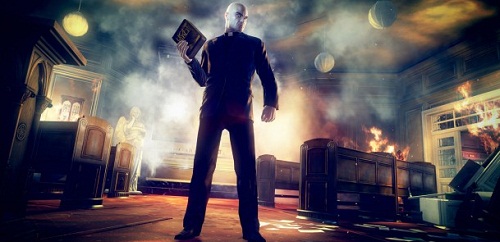
I played Hitman: Absolution this week. Like everyone else I was disappointed by the radical departure from the original gameplay format, but I wasn't entirely distraught. I enjoyed myself. If the stealth system were separated out from the disguise system, and the balance struck a little more in favour of larger levels, I think the rest could have been quite palatable. More than that - these vignettes of blending into train station crowds, hunting nuns in cornfields and stalking cops on rooftops bring dashes of dynamism and variety to a formula that, dare I say it, stands to benefit from it.
Absolution also got me thinking about Hitman's oft-fraught relationship with narrative, and about how the bland cutscenery of the last two games seems to be missing the point. I love IO and I love these games - and I want to formulate something constructive. To do so I'll ask a simple question:
What is the point of Hitman's Narrative?
The narrative design in a game is there with one purpose, which is the same purpose as every other element in development - to help deliver an interactive experience that focuses on the controlling idea. The controlling idea is what the project is about. It's a description of what the end-user experience should be.
Hitman's controlling idea (its point) is plain enough: to be an expert assassin; to explore, understand and violently participate in a living world. By focusing on realistic environments, psychological judgements (or understanding of AI routines if we're being cynical) and calculated subterfuge over blind Rambo-ism, Hitman is, more than most stealth 'n gun games, a simulator. Albeit a simulator with a dark sense of humour.
How do you usually plot a simulator?
Usually not with cutscenes. The more popular alternative is simply to avoid plot altogether. A plot supposes some artificial linearity - some element of the game that isn't simulated, but locked in - and that would be opposed to the very concept of what a simulator is. Silent Hunter, SWAT 4, the various brilliant flight sims - they don't force you on a particular path. They give you enough background detail for context, then let you go off and create your own tale.
I'm not sure this is where Hitman's going. For one thing, Hitman is different from some other simulators in having a protagonist with a personality (sort of) and - so the argument goes - therefore you need a character arch, and a plot, and cutscenes... we know where this ends up. For another thing - and it seems strange to admit this - but I just can't imagine Eidos biting the bullet and accepting that they may not need a plot. Hitman is a AAA game, and AAA games have stories now!
So if we're committed to putting something in between the assassinations (and it is surely the assassinations that are at the heart of Hitman) what should it be?
How else could you design Hitman's narrative?
How about this: Career Mode. I'd argue that if we want anything from Hitman's narrative, it would be something that supports the simulation feel of the core gameplay. What's cool about 47 is not, I think, what he does when the people he works for betray him and he's left with a genetically engineered little girl to protect. What's cool about 47 is that he's a professional. A cool Hitman story would focus on that.
What would a year in the career of a Hitman be like? What would fill the gaps between the hits? I think there would probably be a bunch of the things you'd expect - upgradeable, explorable hideouts, collectable weapons, a currency based on mission success... You'd also want to make greater use of some other elements from earlier Hitman games - Blood Money's procedural newspaper articles could be developed into something that gave us a sniff of the larger world.
What might turn out to be particularly useful are those little vignettes from Absolution. A career mode would need something more than a few management elements to deliver the sense of being 47. We'd want to see just a little of the pain-staking preparation that goes on behind the scenes. So perhaps we'd have some side-missions: a trip to the blackmarket weapons dealer, a hit on a potential witness, a scouting mission on local police patrols. If we were really clever we'd have these develop and overlap in unexpected ways: perhaps on the scouting mission we'll spot the weapons dealer entering the police station. Depending on 47's actions he may come home from his next mission to find them knocking at his door.
What I suggest is that by building up this little web of fiction we could bring another layer of detail to Hitman's world. Instead of breaking from the core missions for another video of 47 being betrayed and not being caring about it, let's use that time to tell a different sort of story - one which reflects the core themes of the gameplay experience. One which makes you feel like a Hitman.