Showing posts with label lost horizon. Show all posts

Monday, 7 March 2011

With Fewer Obstacles to Release and Escalating Audience Demand, is PC Gaming Becoming the Realm of the B-Game?

Sometimes I like to wander around Steam looking for some under-marketed, under-reviewed, under-£5 indie gem. Sometimes I find fascinating stuff like Dinner Date or Winter Voices; sometimes it's utter tat; but it's always interesting (and rare) to come to a game with zero preconceptions, and that's not half because a boxed game is usually too expensive to buy without reasonable evidence that you're going to like it.

On my travels recently I've come accross an increasing number of what I'm going to term B-Games. In cinema, the B-Movie was the cheap filler that was produced - often as accompanyment to a more polished feature - to feed the unforseen demand that had appeared overnight. They usually focussed on tick box stuff that could easily be sold: horror, gore, sex, exploitation; and audiences were so hungry for content that they devoured it without complaint.

The idea of a cheap, poorly crafted game is nothing new, but it seems the environment is ripe for a whole new wave. The audience for games today is larger than it has ever been. The games themselves, though, are more expensive to produce and provide ever shorter playtimes. This, I'd argue, is exhasperated by the fact tastes are more niche than they ever have been. There are a greater variety of genres to focus on - many of which are hard to come by these days - and gamers are older and more set in their ways than the fledgling industry could have allowed 20 years ago. Digital distribution, therefore, provides just the low cost delivery platform required in order to produce and distribute a cheap genre game that will - for simply being in that genre - satisfy a profitable portion of the audience.

Look at the games that are able to find their way onto Steam. Dungeons not only makes no qualms about its Bullfrog inspirations, it uses them in its marketing (and though there is gameplay differentiation here, visually speaking 'inspired by' is less fair than ' clone of'). Hacker Evolution's content and minimalist presentation is straight Uplink in a way that's so uncanny any claim of shared inspiration can be safely replaced in favour of canny targeting. Kaptain Brawe is an achievement for looking more like a LucasArts adventure than anything ever made in SCUMM - it's practically postmodern simulacra. Monday Night Combat is hard not to like, but it's plain bizarre to release a $15 budget version of a game that's already only $15.

Analysis? Well, I suppose in the same way that all the talented indie devs who spend their days turning out retro clones is a drive that completely passes me by, the idea here of relegating game design is a touch uncomfortable. B-Movies were cheap, and bad, and mostly better forgotten - sure; but they also pushed boundaries and proved their longevity (through ironic rewatching, historical interest and modern homage) in ways I find it hard to believe games are likely to ape.

It could be argued, though, that what this is all truly indicative of is just how slowly games are developing. At that rate we should hit our Post-Classical era some time around two centuries from now.

Wake me up when we get there.

Wednesday, 1 September 2010

Thanks & Here's a Game I Found

The first rule I learnt in viral marketing was "Never ask people to digg/reddit/twitter etc." Actually, Twitter didn't really exist at the time, but still: provide the call to action, stick a button in there, but don't fish - because the web's smarter than that. I'm bad, sometimes, at following the rules.

Posts like my recent interview with Brian Mitsoda are, to my mind, a large part of what this blog is supposed to be about. I get to talk to someone I really respect, we cover some theory and support an exciting new indie game at the same time. I want interactive writing to have a louder voice, and this looks like one way to go about it.

Of course, Wordle (thanks GAMESbrief) has a different concept of what this site's about:


Glad 'game/s' are big, 'narrative' and 'character' made decent showings, though I really use the word 'really' too much.

Back to the point, I'd love for fantastic content like Brian's interview to receive the hits it deserves. To that end I'm going to tip you off on a great free game just as soon as I've reminded you that you can follow me on twitter (@tomjubert) or retweet things you think are sweet; sign up for RSS or use blogger's crazy 'follow' thing on the right hand side; tip off your mates on interesting content with your blog, digg, reddit etc (with the button that ought to be somewhere more obvious) or even by word of mouth; and above all else use the comments to say the interesting and insightful things I know you're full of. The blog's been running for three months now and apart from realising I should have built it in Wordpress I'm real chuffed with it, and in particular with the support it's found with you lot.

Thank you.

So I owe you a free game tip off, huh? Here's the long awaited English version of Memory Reloaded - a throw away yet inventive piece of interactive political commentary.

PS Lost Horizon's got a demo out, is up for pre-order, and has simply the cutest pop up box art.

Friday, 20 August 2010

My Games & MY Games: What I Did on Which Projects

Wouldn't it be lovely if MobyGames had a feature for studio leads or staff themselves to add detail to their credits? If someone's credited as a writer that could mean almost anything. If I'm reading about a level designer, I'd love to know exactly which levels in the game they designed.

Following on from discussion in this post, I thought it'd be worth the time to list the projects I'm involved with and to spell out exactly what responsibility I held on each. Quite apart from allowing me to feel better about the credit that I'm taking, I hope this might prove an interesting exposé for anyone interested in the practical role of the narrative designer, not to mention useful for anyone thinking about sending a contract my way.

Fairly briefly, and in order of least to most creative control, these are the major projects I've worked on, how I was credited, when I did the work and what that work actually entailed.

Amnesia (PC), 2008, 2009 - Uncredited (as far as I know, and by request)
I worked on Amnesia during pre-production. All Frictional had at the time was a setting and gameplay, and I produced, among other things, a document detailing plotting, setting and character concepts, and some gameplay mechanics. When Frictional ran into publisher dificulties they went right back to the drawing board and returned with a full (and very different) narrative design, which is when we (amicably) parted ways.

Driver: San Francisco (360, PS3, PC), 2010 - Not sure what the credit will be yet (better be one though)


I was part of a team producing in-game dialogue to a rough brief. My dialogue will make up around 10% (at a guess) of the total. The style and character were obviously set beforehand, but there was no concrete style guide, allowing for reasonable flexibility within the confines of a predefined bark script (in which every character has the same type of lines, triggered by preset events). The deadline was extremely tight and barks are never easy, but I hope my characters more often than not bring a smile rather than a cringe.


Hydravision Survival Horror (DS), 2009 - Cinematics Writer

This was a last minute job during Alpha. All levels and most assets were in place, the story set in stone. There were around ten one-minute-long cut scenes, each with variations dependent on player character. I was delivered a doc setting out exactly what story information had to be communicated in each, but was free to improvise within that and within the established style of the franchise. It was challenging to write good dialogue when little attention had been paid to the plot itself, but I hope my penchant for dark humour and philosophical observation shine through, particularly towards the end.

Lost Horizon (PC), 2009/10 - English Script Adaptation
The 100,000 word script for this one was written in German and translated into English, my role being to polish it up. Every line was delivered in a spreadsheet, so while I had reasonable freedom within each line, the gist had to remain the same and I had no control over the overall story or puzzles. The translations tended to be grammatically sound but very stilted, and I'd say that I quite significantly rewrote the majority in a consistent style that I felt appropriate. That style - a tongue in cheek, silly sort of feel - was to some degree my own, but also significantly defined by the nature of the game and the plot. I was also in the studio for the voice work, though I wasn't directing and had no involvement in casting.


Penumbra: Requiem (PC), 2008 - Written by
The guys at Frictional decided to take a very different approach with this expansion pack. Gameplay was to be entirely divorced from narrative, meaning I had no control over the physical lay out of the levels, puzzles weren't narratively justified, and my main story telling tool was to be voiced notes. The overarching 'plot' of Philip exploring his mental demons was my own, changed from the original concept of Howard exploring the Shelter and gradually going insane, but 'plot' is in quotes because when you can change an entire story without actually adapting any of the levels you know there's not going to be much involvement. I felt as if the Penumbra story was largely over, and it was a bit of a shame to go out on this note - this game was no small part of my reluctance to be involved with Amnesia.


Penumbra: Overture (PC), 2006/07 - Written by
This was the first game I ever worked on as a narrative designer - I wasn't credited as such simply because at the time I'd never heard the term. A three game plot outline was in place, though detail was very sketchy and really only the very broad strokes and the setting made it to the final game. Plot in place for Overture was actually very minimal - Philip travels through the mine to find his father - and my biggest contribution was the introduction of central antagonist and plot driver, Red. All the other story elements in the game were either developed from ideas the guys at Frictional had in place, or originated with me, and I had (mediated) control over every element in the story, from note content and placement to visual design and level layout. I was also involved in game design discussion, and I cast and directed all three games in the series.

Penumbra: Black Plague (PC), 2007 - Written by
Following feedback from Overture I had greater confidence and experience, and with the cancellation of the third episode I was also tasked early on with overhauling the plot. As a result, Black Plague remains the game that I most cite as representative of me as a narrative designer. The plot and level design were a result of a high level pitch I produced which was then discussed in detail with Thomas [Grip, Lead Designer], from which he drew up level designs. Every character - save for Philip and Howard - and plot twist was my own work, as were the original ideas for the sanity effects and the ways in which the player can interact with his alternate personality, Clarence. Outside of narrative concerns I was a staunch supporter of dropping combat altogether, and I also contributed some broad puzzle concepts.

Unannounced Hydravision Action / Adventure (360, PS3), Ongoing - Narrative Designer
If and when this project sees release, I truly hope it will take over from Black Plague as my calling card. The guys I'm working with had a scenario, plot outline and two player characters in place, and while the scenario and one of the characters were both outstanding, I've entirely reworked the plot and created the cast from scratch. I'm unspeakably excited about the potential for this project.

ir/rational (PC), 2009 - Written, designed and developed by
Finally ir/rational is, fairly obviously, the game over which I've had the most control. Because, you know, I made it. While it could be argued that I was limited by my meagre programming ability and time contraints, ir/rational best demonstrates the style of writing and topics that interest me, as well as my game design ability. For better or for worse, ir/rational provides me no excuses - ir/rational is a 'Tom Jubert game'.

Wednesday, 28 July 2010

The Hollywood Model of Employment & Individual Culpability


The recent consideration I've been giving to the projects I've worked on and my role within them has encouraged a regular topic of discussion between myself and GAMESbrief's Nicholas Lovell to resurface in my thoughts: that is, the idea that the current model of permanent 100+ man teams is dead, and that video games as a medium should be moving towards the project-by-project freelancing approach of the film industry.

The arguments in favour of such an approach are plenty:

1. Eliminate costs associated with employee downtime between projects
2. Eliminate post-project redundancies, rendering both staff and the PR department significantly less grumpy
3. Hire a bespoke team suited to each project and scale it up and down as the schedule dictates
4. Reward talent by pursuing those with proven credentials, and don't get lumped with salaried dead weight
5. Freedom for everyone to work on more varied projects
6. A possible compromise for unpaid overtime (ie higher day rates and time off between projects)

The ideal system would be for publishers and/or developers to maintain a small core staff. A group of 1 - 20 trusted, talented individuals (perhaps with a leaning towards production experience), ensuring the studio always has permanent personnel who are invested in the company and can ensure external hires work to the standard required.

Following this, if the studio already has a concept or property, the appropriate hires can be made. "We think cell-shading is the way to go, let's have a chat with the art directors from Mad World, Wind Waker and XIII." Alternatively, the Hollywood model allows for greater autonomy on the part of experienced staff. While talent agents for such trailblazers are already starting to pop up, a more industry wide adoption of this approach might empower - for instance - a talented programmer to approach a publisher with an astonishing concept for a new AI routine, and for that publisher to finance his personal research with a view to providing a growing team as and when the routine has been proven and a game is ready to be built around it. On a more obvious level, a designer and a writer could pitch a project to a studio in just the same way as a director might approach Pathé with a screenplay.

Culpability
One of the main draws of this system for an individual developer might be increased public and industry recognition of his or her talent. In the next month or two there are two games coming out that I'm connected to: Lost Horizon and Amnesia. What's strange about these games is that on one my name will be in the credits as the writer - despite the original script being by someone else - while on the other a great many people will assume I was the writer when in fact I haven't been involved.

When Amnesia arrives, it's going to be an interesting experience discovering what a Penumbra game looks like with someone else behind the keyboard. Naturally I'm a part of this industry because I want to be involved in developing fantastic, important games; but at the same time there are few creatives who could honestly claim they don't hope for some kind of artistic identity in their work, some stamp of their involvement. If Amnesia arrives to rave reviews it's only right that Mikael Hedberg should take credit; if things don't go so well it'll be disheartening that very few players or critics will realise why. Full credit to journos like Lewis Denby - who do their research and credit appropriately in their articles - but while it's very common to read something like, "Mauro Fiore's cinematography in Avatar is his best work to date," in a film review, it's incredibly rare in games.

In Lost Horizon, while I hope I've added a distinctive flavour of my own, the script is ultimately originated by another writer. While I was involved in the voice direction, I wasn't sitting in the chair, and I had no say over casting. If and when Lost Horizon receives praise, it's right that I should take only partial responsibility - but it's incredibly difficult to ascertain who's culpable for what.

My dream is of a model where key talent (department leads etc) are recognised for their triumphs and successes by the press, the audience, and by the industry. While most developers remain salaried their studios will remain cautious of talent poaching, but with an employment reform developers would be free to deliver, along with review code, a short document highlighting the central talent and their roles, so that critics can credit appropriately.

There are arguments against, of course. Speaking with Craig Pearson of PCG UK, he pointed out the potential damage a bad review under this system could do to a career. It's the problem games writers complain of non-stop: that good writing implemented badly reflects badly on the writer through no fault of their own. There's also the question of who deserves this elite status as a front of the box credit.

There's no denying these are problems, but they're problems every other industry seems to handle, and I believe the benefits outweigh the drawbacks. I dream of the day when someone plays a game and says, "Well, I can see elements of what Brian Mitsoda brought to the latter stages of Neverwinter Nights 2, but it's clear his style is more coherently implemented in Vampire: Bloodlines, and this game continues that confidence of expression."

Hey: a man can dream, can't he?

Update 29/07/10: Brian Mitsoda writes a friendly hello and suggests one possible drawback of the Hollywood model is typecasting of freelancers as developers rely more and more on their previous work to secure new jobs. He also points out that, contrary to what's suggested above, of all the very talented people on NWN2 he wasn't actually one of them. My fault.

Saturday, 17 July 2010

Lost Horizon Previews & Artistic Subjectivity

I realised this morning that although I've been doing this job almost four years and worked on nine (nine!) games, the unfortunate fact of long development times means that I've still only had three released, all in the same series. It's strange that in my head I've worked across a load of different genres and formats, on everything from browser-based MMOs to AAA console fair, when all you guys know me for - quite fairly - is Penumbra.

That's about to change. Lost Horizon (trailer) is the new point & click from Animation Arts, the guys behind the Secret Files games, and ahead of its 20th August release date, hands-on previews are flying in.

The Good
The game itself is a beautiful thing of hand drawn backgrounds and cunningly implemented action, set within a tongue in cheek adventure movie. Expect the first reviews to be arriving in the next few weeks, but in the meantime here are some choice preview quotes:
"Lost Horizon just doesn't seem to have a weakness at all and this is one title where I can’t wait to get my hands on the full version!" Twitchy

"The story so far seems to be quite interesting[...] it has a kind of Indiana Jones charm to it, think wartime bars, cabaret singers, and a similar brand of humour. Characters are genuine and believable with some good voice acting." Game On
While I couldn't in any sense call Lost Horizon a 'Tom Jubert story' - in the sense that I only produced a treatment of the original German script, and wasn't involved in casting - I do hope there may be some identifiably me-ish elements to it. While the broad and, sometimes, downright odd humour is not strictly my style - games writers can rarely afford to pick and choose their projects to perfectly match their voice - I do hope lines like "True British workmanship: we can make an indestructible crate, but we can’t make trains that run on time" bring a personal note to the English version of the game.

The Bad
Of course, nothing is ever universally successful, and in keeping with my genuine intention for Plot is Gameplay's Bitch to be as candid as possible, it would be remiss of me not to also quote the only bad preview I found:
"This point-and-click adventure, which has been in development and getting genre fans excited for some time, features – quite honestly – some of the most atrociously bad dialogue I’ve seen in a game for ages." Beef Jack
The Interesting Subjectivity Bit
I could sit here and explain how challenging it is to work within the limitations of a polish job, but the funny thing is I think both the resoundingly positive previews and this one excessively negative example are probably all correct, in so far as art / entertainment is subjective. Lost Horizon is an unapologetic Indiana Jones homage. It's also a game that - quite consciously - doesn't always strive to avoid traditionally ludicrous puzzle scenarios. It won't appeal to everyone. I think Greg Giddens of Resolution Magazine nails it when he says:
"The audience this genre appeals to is specific, and the majority may find the pacing too slow and the experience too dull for their liking. It’s an inherent issue with point and click adventure games that is rarely countered, however, if you can embrace the genre’s style, Lost Horizon will pull you in with its interesting and well rounded characters."
There is such a thing as good and bad when it comes to writing and art: you can try to deliver something and fail. In all other senses, though, what is considered 'good' writing tends more so to be writing that appeals to those with the louder voices: the critics, or the academics, or sometimes the mass market. Writing, in truth, is only as good as the reaction of the person reading it.

No game save for ir/rational has captured exactly what I would do given a blank slate and a budget - that's a luxury reserved for studio founders and novelists. With Lost Horizon I just hope that given the scenario where the player has to manufacture a no-photography sign by drawing a banned symbol onto a camera poster using a bottle of ketchup, the appropriate response, for better or for worse, is:
"Some might say using ketchup to manufacture the 'banned' symbol was unnecessarily convoluted. I say 'Do YOU see any red felt-tips around here?'"

Saturday, 15 May 2010

Lost Horizon Voice Recording

While these days we see plenty of interviews with writers, and narrative themed postmortems, I still sometimes feel like the actual process of writing a game is kept under wraps. One of the things that I want to do with this blog, therefore, is to expose some of the work that I do on a daily basis (to the degree NDAs allow, natch).

Not long ago I finished up a week of studio work, recording dialogue for Deep Silver & Animation Arts' upcoming point n' click, Lost Horizon; it also marked the end of the project (for me, for now) and the completion of almost 100,000 words of in-game text, taking around three weeks to record in total.

On Lost Horizon I was hired as as the English script writer. The game is developed in Germany, in German, with the text then translated into English and proof read. I then do a treatment, adding back the flourish that's been lost in translation and ensuring the characters remain consistent. My text is then proof read again and delivered to the recording studio, and it's also used as the basis for translation into all other languages. This process is actually split into three batches over 12 months, allowing the cost of writing / recording to be spread out, and for three alpha / vertical slice builds to be created. The unappealing alternative is having to wait until the last minute to actually see and play a complete product.

While I've directed and cast previous games, both roles were handled by Side UK this time around, the studio having been arranged before I got involved. Incidentally (and in the interest of full disclosure) my agency, Sidelines, is actually an offshoot of Side. This meant that at the very least I didn't have too many problems finding my way to the central London location.

My role behind the glass was to make on-the-fly edits, provide additional direction, and to brief the actors - and therefore to know the game and characters inside out. Whenever I'm writing, the more information and documentation I can gather about a game the better; but it is, ultimately, a poor replacement for actually being able to play the thing. Fortunately that's precisely what I was able to do on Lost Horizon, and it really does make a difference. For each batch I would play through the section in question, tackle the script, and then play through again once the English voice had been recorded and implemented in order to recommend pickups. It's impossible to get everything right first time in the studio, no matter how well prepared you are, so the fact that Deep Silver had budgeted for re-records for the odd line that ends up sounding out of place was a real advantage.

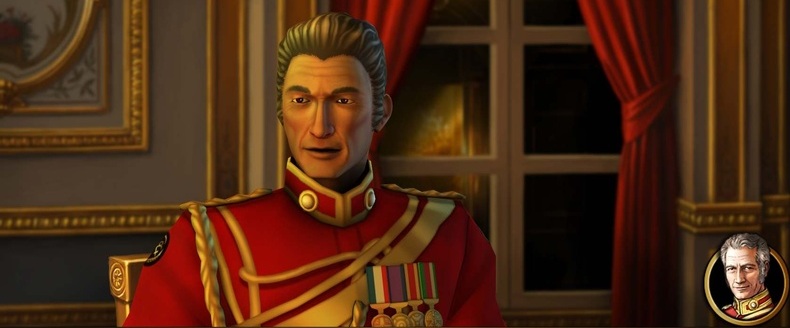
In total we used around ten union actors to voice approximately thirty characters, most of whom were bit parts. The central character, Fenton, is a lovable British rogue, and he had the vast majority of the lines. As the actor settles into the role things begin to go more smoothly and after a few days the target pace of 60 lines per hour (pretty swift) was well within reach. I'd be lying if I said at least some of the direction didn't boil down to "Adam, could you give it a bit more Roger Moore raised eyebrow, please?" and later simply "Brow!" but, well, it's just that sort of game.

Side UK is one of London's best located studios, and probably the studio that most specialises in video game scripts. Phil Evans, the director, doesn't just work on a lot of games, he understands them. Without that understanding there's a huge margin for error. Knowing whether Fenton needs to sound pleased with himself or not based on whether the object he's talking about is in his inventory or on the ground makes the difference between a well-voiced game and a fail. That's why it's important to use a studio that understands the medium, and to most definitely have your writer in the room.

Lost Horizon is a lovingly produced homage to the Indiana Jones adventures of yesterday. It is not a $20 million project. The fact that, despite this, no expense was spared on the writing and the voice recording is a real credit to Deep Silver and Animation Arts. On a larger project these areas will make up only a fraction of the overall development cost - there's no longer any excuse not to get it right.