Showing posts with label top 15. Show all posts
Monday, 30 August 2010
Brian Mitsoda Talks Vampire: Bloodlines & Newly Announced Dead State
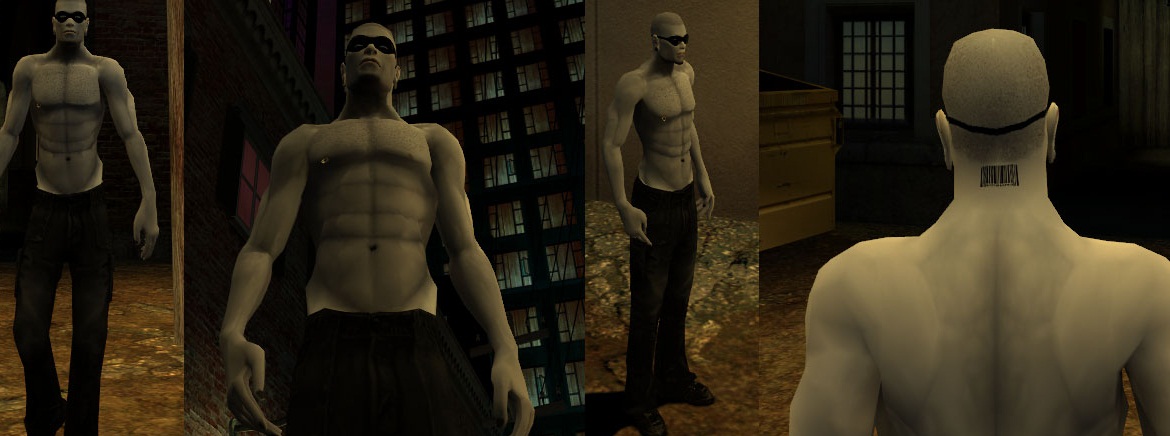
I first heard Brian Mitsoda's name attached to an interview he did with Rock Paper Shotgun back in 2009 (meaning I've just had to google 'rock paper mitsoda', which makes me smile), discussing one of the games that most influenced my career, Vampire: The Masquerade - Bloodlines. Brian started out in QA at the infamous Black Isle, before taking on writer's responsibilities and moving over to Obsidian. In his own words his 'cancelled project resume is stunning', and despite working on an early version of Alpha Protocol, Bloodlines remains his only narrative credit. Brian and new wife Annie VanderMeer Mitsoda founded small independent DoubleBear in 2009 and have since been working on a zombie RPG that more than registered in my list of games I'm excited about last month.
Hi Brian, thanks for talking to me today. First up, we have to do some Bloodlines chat, and in particular tackle the Malkavian character who, as you know, was no small influence in my character design on Penumbra: Overture. The Malkavian was a taut combination of nonsense poetry, startling insight, hilarity and depravity. To what degree was he (or she) based on White Wolf's existing template [Bloodlines is based on a table top property], and from where else did you draw inspiration?
I read most of the source material – all the core and clan books. While I might have written the majority of the Malkavian dialogue, the idea to have Malkavian-flavored responses came from Chad Moore (who also wrote a few characters, including Strauss). One of the things I wanted to do with the Malkavians was not just make them “crazy” because I think that’s too easy. I wanted them to tap into the Malkavian “insight” – somewhat like having ESP without really knowing why you know these things – and also make them sound like people that would make you uncomfortable, rather than be over-the-top zany.
People tend to make madness hilarious, and I wanted to try to get into the head of someone without impulse control or rational thought patterns. Sure, sometimes they could say things that were amusing, but if you were to actually have a dialogue with someone who spoke like a Malkavian, you might first think they were weird or putting you on, then you’d be a bit creeped out, and finally you’d try to find ways to get out of the conversation because you had no idea what this person was capable of. They were usually some of the last dialogue I did to finalize characters, so at the point I was writing them, I was probably a bit out of it myself from deadline stress and lack of sleep. Whenever I have a chance to do mental illness in a character, I want to portray it closer to reality than comics or movies – it’s just a cop-out when a character’s motivation/antics are hand-waved because “they’re crazy!”
Bloodlines embodied, for me, a very Fallout vibe, in so far as it took the now entrenched western RPG template and without drastically changing the mechanics pushed the boundaries beyond what they could arguably handle. As anyone who played the game out-the-box will know, it was a rough edged diamond. I know you've said that game overpromised, but would you really rather be working on a Dragon Age where arguably the biggest advancement over the past decade has been the engine?
Well, working on successful games is nice because you have the money to keep the lights on for the next game, but I loved working on Bloodlines, despite all the problems and challenges we faced and its lack of (immediate) success. It was a smaller team and I think we felt real ownership over our contributions. That’s something you don’t really get on larger teams and it’s somewhat a trade-off for large scale projects – you either get better compensation or more control, but rarely are you going to get both. Some people want stability and a small piece of a gigantic machine to work on, and that’s fine. I’d much rather work on projects where everyone knows everyone and where we don’t have to have several meetings to decide on the color of the hero’s shoes. I don’t necessarily think every project should be the most ambitious ever, but it would be nice if more games took some risks. I completely understand when projects with $50 million+ budgets play it safe, though it would be nice if there were more $500,000 projects that made you felt like you were playing something unique.
I often feel a little as if I've walked into my role as a writer without too much formal training - on the job or otherwise - and I've learnt my trade by trial and error. It must be very different starting out at a studio with a couple of experienced senior writers. How did you learn to write games, and how would you see things ideally?
Good question... I didn’t stumble into my job so much as pursue it and get really lucky in regards to the projects I was assigned to write to. I trained as a fiction writer, then worked on becoming a screenwriter, then applied both to the very demanding and frustrating realm of game writing. Game writing is really exciting from a gameplay/story perspective, considering it (ideally) reacts to the way the player is making choices in the game. HOWEVER, my biggest problem as a game writer is making sure every possible path through a dialogue/character arc is top-notch and memorable, which is like coming up with a screenplay with ten times the good lines per character. You’ve got to pay attention to the flow so the player doesn’t feel like any one path is the “boring” path or that the character isn’t acting out of character to close off a logical path of dialogue. You run the risk of putting in too much reactivity and bloating your dialogues to the point that 1 out of 100 players will actually see a line of dialogue. It’s really a balancing act, and if done right, it is both good dialogue and good design. It’s a challenge and it’s a form of storytelling I feel is still in its infancy. There are simple ways of building reactivity that would be easy for more teams to implement. Ideally, people would pick a few important ways their game could respond to player choices and throw in some simple story branching/reactivity to reflect that, but since games and cutscenes/VO takes so much time and money, I understand why so many companies go the linear gameplay with cutscenes route.
Okay, let's talk about Dead State [previously known under codename, ZRPG]! The reason I'm excited by the project is you guys seem to really know what should make a good zombie experience. It's not about explosions and mad professors; it's about the small scale, that-could-be-me tales that put human nature under pressure to see what comes out. Though maybe some explosions help too. You guys move fast, can you give me a quick run down of your goals and where the game's at now?
Dead State is coming along pretty quick these days, because honestly we have an amazing group of people working on the game – I’m really excited for players because I’ve seen what they’re going to experience. The quality of the work the team is turning out pleases my manager, designer and gamer sides, and that’s just such a good feeling to have when you’re working on a game. Really, if you’re following the game right now, go onto the forums and thank the team in advance – you’re going to love what they’re doing.
Our goals for the game are lofty, sure, but we’re designing around our limitations, so if people interpret our goals as “the most ambitious game ever” it’s mostly just smoke and mirrors. We planned this out carefully and thought of the easiest way to implement our systems with tech that had already been used for another game, so we’re not trying to go to Mars here. Our main concerns are that the combat is fun (rather than “good for what it is”), the game is reactive, the characters are memorable, and that players each have different experiences. We want them to be able to go through the game again and have a different set of challenges and different interactions with the characters each time. We picked a setting that allows for a lot of structural freedom – the world’s falling apart, law is what you make it, and morality is based on survival. It’s a really easy contrivance to make the game bend to the player’s whims and for dramatic situations to arise.
You guys are really into the indie community, open development thing - you're posting design updates to your forums every week. You talked about the morality system recently: no ethics slider, no bonus powers, lots of possible scenarios. You make it sound like a lot of elements of the game are procedural - is that the case?
We’re hoping that subtext, subtlety, paying attention to your surroundings/allies is going to be enough for people that they don’t need it popping up in the middle of the screen as a floating number. Most of the game is dependent on your decisions and how you’re leading the other survivors. It’s not a very linear game, though there will be certain blocks of time that events may occur. How you respond to those events, that’s up to you. There are also areas and NPCs you’ll discover at different times and it’s still up to you in regards to how you want to deal with them. We do have an end to it all, but I imagine each player is going to have a different journey there and even a different end to their game. We could fall horribly on our face in this regard, but again, I think we’ve got a solid system in place and it’s going to allow for a narrative freedom that players may find kind of novel.
Okay, let's try and get into some theory. I've been thinking a lot about the difference between providing the player agency, and providing the illusion of agency. As game designers our job traditionally is to pull the wool over players' eyes, but sometimes it's difficult to do convincingly. Take, for instance, the scenario where a player's decision looks like it has in-game repercussions but in truth - should the player reload and go down both paths - it's just a cleverly disguised spot of linearity. Is that somehow analogous to real stunts vs CGI in the movies (provided it looks real it may as well be)? Or is there some value to be found in simplifying interactions in favour of true open ended narrative?
Quite frankly, if we didn’t simplify certain interactions, we’d be writing thousands of lines of dialogue to anticipate player whim. You have to control it. The best way to do this – figure out the decisions that are the most important, that are going to divide the players into certain camps and write the branches to react to that. There are a lot of little flavor replies in most of my dialogues, but every once in a while there’s something where I anticipate the player trying to game the system and respond in a way they didn’t expect. For example, when the player decided they’d had it with LaCroix in Bloodlines, they could say they weren’t going to work for them anymore and they’d get dominated. If they “joined” the anarchs, they could report to Damsel, but they were still working for LaCroix (conveniently) so that we didn’t have to do an entirely different set of dialogues. There’s ways of managing scope, the writers just have to be creative and use the designer side of their brain.
Finally, let's talk a little about being a writer, because I often find I'm considered a writer first and a games developer second - as if it's in some way an external skill set. I love the fact that as a human being we can be as well, if not better represented by our writing as we are by anything we might say or do. What do you feel your 'style' is, and do you get adequate opportunity to express it in our medium?
Hmm... what is my style? Tenacious sarcasm? Reticent optimism? Self-flagellating ego? That’s a tough one. It’s a hard sell in most gigs where participants are looking for ultimate, unfailing triple-A badass, but fortunately I’ve got the freedom in my current role to create something that doesn’t make me lose sleep at night. Most writers, as I’ve come to understand, are mercenaries, hired to turn out whatever is asked for them. It’s probably not ideal for them but I feel very fortunate that I’ve been given the chance to write some really incredible parts in my career. I don’t think I’ve had to compromise much, or I’ve refused to, to the detriment or benefit of my career. Up to last week I’d say writers/publishers were underestimating the intelligence of our audiences for good reason, but now I feel like maybe we haven’t been giving them the benefit of the doubt. I think writers need to express more complexity and depth to their audience as time goes on – you can only ride with training wheels for so long before you wonder why they’re still on there. We really hope to deliver a game that doesn’t underestimate the intelligence and expectation of the player, and I don’t really think that’s a huge risk at this time in game development.
Brian, thanks for your time, and best of luck on Dead State.
DoubleBear will next be appearing at PAX, 3rd - 5th September 2010.
www.doublebearproductions.com
Saturday, 10 July 2010
Some Upcoming Games I'm Excited About: The Top 15
This post completes the countdown of the commercial releases I hope are going to do fascinating things with interactive narrative over the coming year or so. I hope you enjoyed the ride, and do let me know what you think.
The story so far:
15. Privates
14. The Old Republic
13. I Am Alive
12. Brink
11. Kinect
10. The Last Guardian
9. XCOM
8. Subversion
7. Journey
6. Fallout: New Vegas
5. Portal 2
4. The Witness
3. Cargo!
2. ZRPG
1. LA Noire
Developer: Team Bondi Creative Director: Brendan McNamara Release: Q4 2010 Format: 360, PS3
So it is, the No. 1 spot - and congrats to Octaeder for guessing it spot on. I love indie games for their (sometimes naive) ambition, and they've dominated the top half of this list, but when I really thought about what deserved to make the top of the podium, LA Noire turned out to be the game that I feel strikes the best balance between broadening the ways in which we tell interactive stories; providing an engaging, polished experience; and actually having half a chance of delivering on its promises.
So why does this game's success intrigue me more than the ebullient collection of prospects further up the page? If I've excluded GTA V and Mafia II, why should what is essentially GTA: Noir get so much as a mention?
It's all about that balance. Behind the familiar GTA framework lies a game not so much concerned with drive bys (though I'm sure there'll be a touch too much of that for my liking) as with crime investigation and human interaction. Where Red Dead and Bully proved to be straight up relocations of the GTA format, LA Noire's extended (and at least once rebooted) development cycle has brought the game far closer to a genuine pursuit of more than just the film noir aesthetic. On a thematic level it's a game about interrogations, deceit and human flaws, but that's something that carries through into the gameplay.
While crime scenes are by no means procedural - we're still dealing with a more complex iteration of old school point & click mechnics - we're promised the angles will quickly open up. Find the murder weapon and the receipt in the abandoned vehicle, question the shop keeper successfully and harass your suspect into a confession. Or follow him home and give his wife some grief. Or just wait around and see if he comes back for his car.
More important are the interrogations. We've heard every game with pretty pictures for the last ten years claim mastery of the uncanny valley, and while Team Bondi's unlikely to deliver on that one, it's moving facial animation in an absolutely essential direction: towards emotional communication. An interrogation can be affected by anything from the clues you've collected to the style of your approach, but they key element will be your ability to read the characters.
That Team Bondi expects us to be able to tell whether or not we're being deceived at all is a unique and crucial step forward; that we're expected to do so not from what characters say but from how they say it renders this an exciting experiment indeed.
Honourable mentions & closing comments
There's a host of fast approaching sequels that promise to deliver compelling narrative experiences that didn't quite make the list. Games like Mafia II, GTA V and Mass Effect 3 are bound to be great, but they're unlikely to do anything worth writing about. Conversely, more elusive efforts like Beyond Good & Evil 2 and Spy Party are just too obscure right now to really consider seriously. Deus Ex: Human Revolution I just plain forgot about.
Looking through what's coming up, though, I realise that while I've been grudgingly writing yearly previews for various outlets for some time, I really feel this year like things are finally looking more positive. While a great many of the projects listed clearly fall into our industry's traditionally glass-is-half-full position of "I know it's a game about elves and explosions, but there's also some good story in there provided you don't blink", they're doing so in increasingly interesting ways. The indies, on the other hand, are growing year on year in their level of professionalism, scope and - perhaps most importantly for interactive narrative as a whole - commercial prospects.
Of course, I've tried to level reasonable doubts here, rather than produce the usual homogeneous and unrealistically optimistic video game preview, and some of these titles are bound to fail in their delivery if not their ambition. But that's OK. Those that fail will still open up the playing field for later attempts, and the double edged sword of gaming's continuing (though diminishing) ignorance of good story telling is that while a great many gems are overlooked, at least as many - such as Cryostasis, The Sands of Time and Beyond Good & Evil from recent years - will end up coming from absolutely nowhere to entirely redefine what we can expect from our medium.
Who says its such a bad thing to live in interesting times?
The story so far:
15. Privates
14. The Old Republic
13. I Am Alive
12. Brink
11. Kinect
10. The Last Guardian
9. XCOM
8. Subversion
7. Journey
6. Fallout: New Vegas
5. Portal 2
4. The Witness
3. Cargo!
2. ZRPG
1. LA Noire
Developer: Team Bondi Creative Director: Brendan McNamara Release: Q4 2010 Format: 360, PS3
So it is, the No. 1 spot - and congrats to Octaeder for guessing it spot on. I love indie games for their (sometimes naive) ambition, and they've dominated the top half of this list, but when I really thought about what deserved to make the top of the podium, LA Noire turned out to be the game that I feel strikes the best balance between broadening the ways in which we tell interactive stories; providing an engaging, polished experience; and actually having half a chance of delivering on its promises.
So why does this game's success intrigue me more than the ebullient collection of prospects further up the page? If I've excluded GTA V and Mafia II, why should what is essentially GTA: Noir get so much as a mention?
It's all about that balance. Behind the familiar GTA framework lies a game not so much concerned with drive bys (though I'm sure there'll be a touch too much of that for my liking) as with crime investigation and human interaction. Where Red Dead and Bully proved to be straight up relocations of the GTA format, LA Noire's extended (and at least once rebooted) development cycle has brought the game far closer to a genuine pursuit of more than just the film noir aesthetic. On a thematic level it's a game about interrogations, deceit and human flaws, but that's something that carries through into the gameplay.
While crime scenes are by no means procedural - we're still dealing with a more complex iteration of old school point & click mechnics - we're promised the angles will quickly open up. Find the murder weapon and the receipt in the abandoned vehicle, question the shop keeper successfully and harass your suspect into a confession. Or follow him home and give his wife some grief. Or just wait around and see if he comes back for his car.
More important are the interrogations. We've heard every game with pretty pictures for the last ten years claim mastery of the uncanny valley, and while Team Bondi's unlikely to deliver on that one, it's moving facial animation in an absolutely essential direction: towards emotional communication. An interrogation can be affected by anything from the clues you've collected to the style of your approach, but they key element will be your ability to read the characters.
That Team Bondi expects us to be able to tell whether or not we're being deceived at all is a unique and crucial step forward; that we're expected to do so not from what characters say but from how they say it renders this an exciting experiment indeed.
Honourable mentions & closing comments
There's a host of fast approaching sequels that promise to deliver compelling narrative experiences that didn't quite make the list. Games like Mafia II, GTA V and Mass Effect 3 are bound to be great, but they're unlikely to do anything worth writing about. Conversely, more elusive efforts like Beyond Good & Evil 2 and Spy Party are just too obscure right now to really consider seriously. Deus Ex: Human Revolution I just plain forgot about.
Looking through what's coming up, though, I realise that while I've been grudgingly writing yearly previews for various outlets for some time, I really feel this year like things are finally looking more positive. While a great many of the projects listed clearly fall into our industry's traditionally glass-is-half-full position of "I know it's a game about elves and explosions, but there's also some good story in there provided you don't blink", they're doing so in increasingly interesting ways. The indies, on the other hand, are growing year on year in their level of professionalism, scope and - perhaps most importantly for interactive narrative as a whole - commercial prospects.
Of course, I've tried to level reasonable doubts here, rather than produce the usual homogeneous and unrealistically optimistic video game preview, and some of these titles are bound to fail in their delivery if not their ambition. But that's OK. Those that fail will still open up the playing field for later attempts, and the double edged sword of gaming's continuing (though diminishing) ignorance of good story telling is that while a great many gems are overlooked, at least as many - such as Cryostasis, The Sands of Time and Beyond Good & Evil from recent years - will end up coming from absolutely nowhere to entirely redefine what we can expect from our medium.
Who says its such a bad thing to live in interesting times?
Thursday, 8 July 2010
Some Upcoming Games I'm Excited About: No. 3 - 2
This post continues the countdown of the commercial releases I hope are going to do fascinating things with interactive narrative over the coming year or so.
The story so far:
15. Privates
14. The Old Republic
13. I Am Alive
12. Brink
11. Kinect
10. The Last Guardian
9. XCOM
8. Subversion
7. Journey
6. Fallout: New Vegas
5. Portal 2
4. The Witness
3. Cargo!
Developer: Ice Pick Lodge Release: Q4 2010 Format: PC
WTF is it?
Ice Pick Lodge's radical departure from the morbidity of Pathologic and The Void, Cargo! (damn these people and their ugly punctuation) looks to be a (slightly) more traditional action adventure in a world based, quite literally, around fun.
What's mind-bogglingly intoxicating?
- Ice Pick Lodge are, to my mind, at the forefront of the small list of developers producing truly ambitious, coherent, meaningful experiences in full commercial development.
- The new thematic direction is a surprising twist that would tend to knock a game into Nintendo territory. That the studio's reputation guarantees there'll be more here than meets the eye makes this all the more fascinating a prospect.
What's a little bit disquieting?
- We don't know too much about the game yet, and it's due very soon indeed.
- So far, Ice Pick's games have tended to gain polish and lose complexity as they move forward. Cargo! seems unlikely to entirely shift this direction, but let's hope it can find a comfortable balance between accessibility and artistic merit.
2. ZRPG
Developer: DoubleBear Lead Designer: Brian Mitsoda Release: Done when it's done Format: PC
WTF is it?
ZRPG is the code name for the first project from Brian Mitsoda (Vampire the Masquerade: Bloodlines) and Annie Carlson (NWN2: Storm of Zehir). It's a lowish budget zombie RPG that - unlike Resi and its ilk - focuses on the realities and the human struggle of the inevitable undead apocalypse, rather than the headshots. I kinda hope you've never heard of it, and more so I kinda hope you won't forget about it.
What's mind-bogglingly intoxicating?
- With time at Black Isle and both its offshoots (Obsidian and ill-fated Troika), Brian Mitsoda's writing credentials are second to none. (Incidentally, his Malkavian character in Bloodlines was no small influence on Red in Penumbra: Overture, and it's well worth playing the game back through with that class if you didn't the first time.)
- Zombie games always get zombies wrong. Zombie films were never about the zombies, they were about what you do when your best mate gets bitten. They were about where you'd hole up if it came down to it. They were about taking humanity and putting it under the greatest possible strain just to see what we're really made of. ZRPG gets that.
- And, yes, it's far enough up in the list that it has to have procedural something. In this case, I don't know quite how dynamic the whole game will be, but the intention is to provide a world that players aren't trying to 100%. Companions are voluminous enough that their deaths are acceptable losses, but valuable enough that you'll never feel happy about it. Decisions are of the real, everyday variety, rather than the 'Save the elf for the reward or kill him for the loot' approach. In short, it's exactly the zombie game we've been missing all these years.
What's a little bit disquieting?
- While visually the game's reassuringly scaled back, on a technical level it sounds like a huge undertaking for even a large team. For what has so far remained a largely two man band let's hope this doesn't prove another STALKER.
I'm such a tease: I'm saving the number one reveal for a fresh post. It'll be a big one, so I hope it's worth it, and I really hope it comes as a surprise. Answers on a postcard - there might even be a prize if anyone gets its right. Watch this space.
The story so far:
15. Privates
14. The Old Republic
13. I Am Alive
12. Brink
11. Kinect
10. The Last Guardian
9. XCOM
8. Subversion
7. Journey
6. Fallout: New Vegas
5. Portal 2
4. The Witness
3. Cargo!
Developer: Ice Pick Lodge Release: Q4 2010 Format: PC
WTF is it?
Ice Pick Lodge's radical departure from the morbidity of Pathologic and The Void, Cargo! (damn these people and their ugly punctuation) looks to be a (slightly) more traditional action adventure in a world based, quite literally, around fun.
What's mind-bogglingly intoxicating?
- Ice Pick Lodge are, to my mind, at the forefront of the small list of developers producing truly ambitious, coherent, meaningful experiences in full commercial development.
- The new thematic direction is a surprising twist that would tend to knock a game into Nintendo territory. That the studio's reputation guarantees there'll be more here than meets the eye makes this all the more fascinating a prospect.
What's a little bit disquieting?
- We don't know too much about the game yet, and it's due very soon indeed.
- So far, Ice Pick's games have tended to gain polish and lose complexity as they move forward. Cargo! seems unlikely to entirely shift this direction, but let's hope it can find a comfortable balance between accessibility and artistic merit.
2. ZRPG
Developer: DoubleBear Lead Designer: Brian Mitsoda Release: Done when it's done Format: PC
WTF is it?
ZRPG is the code name for the first project from Brian Mitsoda (Vampire the Masquerade: Bloodlines) and Annie Carlson (NWN2: Storm of Zehir). It's a lowish budget zombie RPG that - unlike Resi and its ilk - focuses on the realities and the human struggle of the inevitable undead apocalypse, rather than the headshots. I kinda hope you've never heard of it, and more so I kinda hope you won't forget about it.
What's mind-bogglingly intoxicating?
- With time at Black Isle and both its offshoots (Obsidian and ill-fated Troika), Brian Mitsoda's writing credentials are second to none. (Incidentally, his Malkavian character in Bloodlines was no small influence on Red in Penumbra: Overture, and it's well worth playing the game back through with that class if you didn't the first time.)
- Zombie games always get zombies wrong. Zombie films were never about the zombies, they were about what you do when your best mate gets bitten. They were about where you'd hole up if it came down to it. They were about taking humanity and putting it under the greatest possible strain just to see what we're really made of. ZRPG gets that.
- And, yes, it's far enough up in the list that it has to have procedural something. In this case, I don't know quite how dynamic the whole game will be, but the intention is to provide a world that players aren't trying to 100%. Companions are voluminous enough that their deaths are acceptable losses, but valuable enough that you'll never feel happy about it. Decisions are of the real, everyday variety, rather than the 'Save the elf for the reward or kill him for the loot' approach. In short, it's exactly the zombie game we've been missing all these years.
What's a little bit disquieting?
- While visually the game's reassuringly scaled back, on a technical level it sounds like a huge undertaking for even a large team. For what has so far remained a largely two man band let's hope this doesn't prove another STALKER.
I'm such a tease: I'm saving the number one reveal for a fresh post. It'll be a big one, so I hope it's worth it, and I really hope it comes as a surprise. Answers on a postcard - there might even be a prize if anyone gets its right. Watch this space.
Friday, 2 July 2010
Some Upcoming Games I'm Excited About: No. 6 - 4
This post continues the countdown of the commercial releases I hope are going to do fascinating things with interactive narrative over the coming year or so.
The story so far:
15. Privates
14. The Old Republic
13. I Am Alive
12. Brink
11. Kinect
10. The Last Guardian
9. XCOM
8. Subversion
7. Journey
6. Fallout: New Vegas
Developer: Obsidian Lead Designer: Chris Avellone Release: 19th October 2010 Format: PC, 360, PS3
WTF is it?
The first major follow up to Bethesda's mixed series reboot moves the action back to the west coast and, more importantly, puts development back in the hands of one of the series' original bright lights, Chris Avellone and his team at Obsidian.
What's mind-bogglingly intoxicating?
- Avellone, along with a number of Obsidian staff, was a key player on Fallout 2. I often feel that modern RPGs (Fallout 3 included) have scaled back the complexity of their interactions in favour of polish, so a slight return to the more slapdash, frontier territory of yesterday would make for a welcome change.
- Obsidian has proven with projects like KOTOR II and Neverwinter Knights 2 that they know how to write. That'll be a relief for those who found the Bethesda's efforts to be strong in every area other than the most important one.
What's a little bit disquieting?
- If Obsidian have a reputation for one thing other than well-written sequels, it's for rushed and poorly polished sequels. Not necessarily their fault, but even Alpha Protocol - their first new IP - failed to break the cycle.
5. Portal 2
Developer: Valve Lead Designer: Eric Johnson Release: 2011 Format: PC, 360, PS3
WTF is it?
It's the only straight sequel that's made the list, that's what it is. Portal 2 was, from inception, a conscious decision by Valve to release a full progression of the formula, rather than go the episodic route. As such it's featuring new gameplay systems (including the paint gun from Tag, whose indie dev team has been brought into the Valve fold), co-op, and a host of schizophrenic GLaDOS sub programs.
What's mind-bogglingly intoxicating?
- Er... it's the sequel to one of the most touching, threatening, hilarious and inventive games of all time. And it's from Valve. And it's got new shit. And it's done when it's done. This is the only sequel (not counting Vegas above since it's an entirely new dev team) in the list because it's the only sequel I can't imagine being happy just doing the same thing over again.
What's a little bit disquieting?
- Kim Swift, the lead designer on the indie hit that later became Portal, left the studio last year.
- For all the brilliance of writing Portal displayed, in terms of delivery it was rarely a game that introduced anything new. But then, when the content is this good I guess that can be forgiven.
4. The Witness
Developer: Jonathan Blow Lead Designer: Jonathan Blow Release: Late 2011 Format: ?
WTF is it?
The designer's difficult second album. Mostly just technical info floating about at the moment, but he describes it as "An exploration-puzzle game on an uninhabited island." With programming input from indie game advocate and ex Spore developer, Chris Hecker (check out Spy Party), I'll be watching this one with interest.
What's mind-bogglingly intoxicating?
- I'd argue Braid had its flaws, but they weren't quite enough to get in the way of its invigorating combination of temporal platforming and attempts to integrate philosophical musings into the gameplay. Jonathan Blow has proven he's one of the foremost supporters of games as more than 'mere' entertainment - not only that, he's proven he can deliver.
What's a little bit disquieting?
- I'm going to go out on a limb and say I found Braid's in-game text a little pretentious. But that's hugely subjective, and at the end of the day I'm just glad games like Braid not only exist, but can shift serious copies.
- The screens look quite a lot like Myst.
Watch this space for the top 3 coming soon...
The story so far:
15. Privates
14. The Old Republic
13. I Am Alive
12. Brink
11. Kinect
10. The Last Guardian
9. XCOM
8. Subversion
7. Journey
6. Fallout: New Vegas
Developer: Obsidian Lead Designer: Chris Avellone Release: 19th October 2010 Format: PC, 360, PS3
WTF is it?
The first major follow up to Bethesda's mixed series reboot moves the action back to the west coast and, more importantly, puts development back in the hands of one of the series' original bright lights, Chris Avellone and his team at Obsidian.
What's mind-bogglingly intoxicating?
- Avellone, along with a number of Obsidian staff, was a key player on Fallout 2. I often feel that modern RPGs (Fallout 3 included) have scaled back the complexity of their interactions in favour of polish, so a slight return to the more slapdash, frontier territory of yesterday would make for a welcome change.
- Obsidian has proven with projects like KOTOR II and Neverwinter Knights 2 that they know how to write. That'll be a relief for those who found the Bethesda's efforts to be strong in every area other than the most important one.
What's a little bit disquieting?
- If Obsidian have a reputation for one thing other than well-written sequels, it's for rushed and poorly polished sequels. Not necessarily their fault, but even Alpha Protocol - their first new IP - failed to break the cycle.
5. Portal 2
Developer: Valve Lead Designer: Eric Johnson Release: 2011 Format: PC, 360, PS3
WTF is it?
It's the only straight sequel that's made the list, that's what it is. Portal 2 was, from inception, a conscious decision by Valve to release a full progression of the formula, rather than go the episodic route. As such it's featuring new gameplay systems (including the paint gun from Tag, whose indie dev team has been brought into the Valve fold), co-op, and a host of schizophrenic GLaDOS sub programs.
What's mind-bogglingly intoxicating?
- Er... it's the sequel to one of the most touching, threatening, hilarious and inventive games of all time. And it's from Valve. And it's got new shit. And it's done when it's done. This is the only sequel (not counting Vegas above since it's an entirely new dev team) in the list because it's the only sequel I can't imagine being happy just doing the same thing over again.
What's a little bit disquieting?
- Kim Swift, the lead designer on the indie hit that later became Portal, left the studio last year.
- For all the brilliance of writing Portal displayed, in terms of delivery it was rarely a game that introduced anything new. But then, when the content is this good I guess that can be forgiven.
4. The Witness
Developer: Jonathan Blow Lead Designer: Jonathan Blow Release: Late 2011 Format: ?
WTF is it?
The designer's difficult second album. Mostly just technical info floating about at the moment, but he describes it as "An exploration-puzzle game on an uninhabited island." With programming input from indie game advocate and ex Spore developer, Chris Hecker (check out Spy Party), I'll be watching this one with interest.
What's mind-bogglingly intoxicating?
- I'd argue Braid had its flaws, but they weren't quite enough to get in the way of its invigorating combination of temporal platforming and attempts to integrate philosophical musings into the gameplay. Jonathan Blow has proven he's one of the foremost supporters of games as more than 'mere' entertainment - not only that, he's proven he can deliver.
What's a little bit disquieting?
- I'm going to go out on a limb and say I found Braid's in-game text a little pretentious. But that's hugely subjective, and at the end of the day I'm just glad games like Braid not only exist, but can shift serious copies.
- The screens look quite a lot like Myst.
Watch this space for the top 3 coming soon...
Saturday, 26 June 2010
Some Upcoming Games I'm Excited About: No. 9 - 7
This post continues the countdown of the commercial releases I hope are going to do fascinating things with interactive narrative over the coming year or so.
The story so far:
15. Privates
14. The Old Republic
13. I Am Alive
12. Brink
11. Kinect
10. The Last Guardian
9. XCOM

Developer: 2K Marin Lead Designer: Jonathan Pelling Release: 2011 Format: PC, 360
WTF is it?
The long-awaited and controversial FPS reboot of the classic turn-based strategy series. Plenty more details here.
What's mind-bogglingly intoxicating?
- I think the new format is actually going to work. There. That's my official line and I'm sticking to it. I'm a staunch PC gamer and a huge fan of the original series, but the idea of mission areas so huge they can't be 'completed', of tactical retreats and more than just run & gun gameplay... these elements promise to keep alive the spirit of X-Com - which, for me, was at its core about the on-the-fly dramas generated by your pixellated men.
- 2K Marin have proven their writing credentials with Bioshock 2 which, to my mind, was actually tighter scripted than the original.
- Five bonus points straight away for being set on earth in the 20th century.
What's a little bit disquieting?
- Given their only full product so far has been an (overly?) faithful sequel to a game of drastically stripped back ambition I'm reserving judgement on 2K Marin's ability to deliver a full and inventive vision with new(ish) IP.
- The setting is Fallout and Bioshock's love child.
- It's not turn-based. But I'll get over it.
8. Subversion

Developer: Introversion Lead Designer: Chris Delay Release: Done when it's done Format: PC, 360(?)
WTF is it?
Maybe I should have just bitten the bullet and labelled this a list of procedural games - although if it was, Subversion would be right up the top. The latest from 'the last of the bedroom coders', Subversion is almost more X-Com than XCOM - control a squad of corporate infiltration operatives in a dynamically generated city.
What's mind-bogglingly intoxicating?
- While there'll be room for the developer's touch (hand crafted elements crowbarred into the game world), the environments and missions are fresh for every player, allowing for some truly unique experiences.
- The studio are famously candid about their development process, and things are sounding good.
- Introversion proved with Uplink and Darwinia that they care about telling personal stories from within a unique and malleable gameplay framework.
What's a little bit disquieting?
- Darwinia + and Defcon didn't really do that at all. Quite the opposite, in fact.
7. Journey
Developer: thatgamecompany Creative Director: Jenova Chen Release: 2011 Format: PS3
WTF is it?
Officially announced at E3 following a leak, Journey is ex-student developer thatgamecompany's adventure style follow up to PS3 download hits Flower and fl0w, and the studio's fourth project. Based in a huge desert environment, the game touts the developer's usual emphasis on minimalist visual style, combined with a new and perhaps more traditional exploration-based central mechanic and a multiplayer aspect that's still shrouded in secrecy.
What's mind-bogglingly intoxicating?
- These guys care about emotional engagement. After speaking with Jenova at last year's Develop I can confirm that, while it's anyone's guess whether or not they'll achieve their lofty ambitions, they're certainly shooting for the right goal posts.
- With what at first appears to be a more traditional adventure / platformer I'm interested to see if this turns out to be a more meaty offering than the studios' previous vignettes. We've seen they can pull off simple and evocative ideas with elegance, but a more complex offering can only be a fascinating prospect.
- The mutiplayer aspect is a sort of massively singleplayer concept: a singleplayer adventure in which you may stumble across other players and choose to work in tandem. From a scripted vs dynamic narrative perspective this is a valuable avenue of enquiry that's been touted for a while but rarely delivered upon.
- This will mark thatgamecompany's first foray into a more explicit narrative. Flower was not without its arc and sentiment, but Journey looks to be focusing on a far more immediate plot.
What's a little bit disquieting?
- It's hardly a problem, but the studio has a very iterative approach to development: expect the final product to look very different.
No. 6 - 4 coming soon.
The story so far:
15. Privates
14. The Old Republic
13. I Am Alive
12. Brink
11. Kinect
10. The Last Guardian
9. XCOM

Developer: 2K Marin Lead Designer: Jonathan Pelling Release: 2011 Format: PC, 360
WTF is it?
The long-awaited and controversial FPS reboot of the classic turn-based strategy series. Plenty more details here.
What's mind-bogglingly intoxicating?
- I think the new format is actually going to work. There. That's my official line and I'm sticking to it. I'm a staunch PC gamer and a huge fan of the original series, but the idea of mission areas so huge they can't be 'completed', of tactical retreats and more than just run & gun gameplay... these elements promise to keep alive the spirit of X-Com - which, for me, was at its core about the on-the-fly dramas generated by your pixellated men.
- 2K Marin have proven their writing credentials with Bioshock 2 which, to my mind, was actually tighter scripted than the original.
- Five bonus points straight away for being set on earth in the 20th century.
What's a little bit disquieting?
- Given their only full product so far has been an (overly?) faithful sequel to a game of drastically stripped back ambition I'm reserving judgement on 2K Marin's ability to deliver a full and inventive vision with new(ish) IP.
- The setting is Fallout and Bioshock's love child.
- It's not turn-based. But I'll get over it.
8. Subversion

Developer: Introversion Lead Designer: Chris Delay Release: Done when it's done Format: PC, 360(?)
WTF is it?
Maybe I should have just bitten the bullet and labelled this a list of procedural games - although if it was, Subversion would be right up the top. The latest from 'the last of the bedroom coders', Subversion is almost more X-Com than XCOM - control a squad of corporate infiltration operatives in a dynamically generated city.
What's mind-bogglingly intoxicating?
- While there'll be room for the developer's touch (hand crafted elements crowbarred into the game world), the environments and missions are fresh for every player, allowing for some truly unique experiences.
- The studio are famously candid about their development process, and things are sounding good.
- Introversion proved with Uplink and Darwinia that they care about telling personal stories from within a unique and malleable gameplay framework.
What's a little bit disquieting?
- Darwinia + and Defcon didn't really do that at all. Quite the opposite, in fact.
7. Journey
Developer: thatgamecompany Creative Director: Jenova Chen Release: 2011 Format: PS3
WTF is it?
Officially announced at E3 following a leak, Journey is ex-student developer thatgamecompany's adventure style follow up to PS3 download hits Flower and fl0w, and the studio's fourth project. Based in a huge desert environment, the game touts the developer's usual emphasis on minimalist visual style, combined with a new and perhaps more traditional exploration-based central mechanic and a multiplayer aspect that's still shrouded in secrecy.
What's mind-bogglingly intoxicating?
- These guys care about emotional engagement. After speaking with Jenova at last year's Develop I can confirm that, while it's anyone's guess whether or not they'll achieve their lofty ambitions, they're certainly shooting for the right goal posts.
- With what at first appears to be a more traditional adventure / platformer I'm interested to see if this turns out to be a more meaty offering than the studios' previous vignettes. We've seen they can pull off simple and evocative ideas with elegance, but a more complex offering can only be a fascinating prospect.
- The mutiplayer aspect is a sort of massively singleplayer concept: a singleplayer adventure in which you may stumble across other players and choose to work in tandem. From a scripted vs dynamic narrative perspective this is a valuable avenue of enquiry that's been touted for a while but rarely delivered upon.
- This will mark thatgamecompany's first foray into a more explicit narrative. Flower was not without its arc and sentiment, but Journey looks to be focusing on a far more immediate plot.
What's a little bit disquieting?
- It's hardly a problem, but the studio has a very iterative approach to development: expect the final product to look very different.
No. 6 - 4 coming soon.
Thursday, 24 June 2010
Some Upcoming Games I'm Excited About No. 12 - 10
This post continues the countdown of the commercial releases I hope are going to do fascinating things with interactive narrative over the coming year or so.
The story so far:
15. Privates
14. The Old Republic
13. I Am Alive
12. Brink
Developer: Splash Damage Lead Designer: Richard Ham Release: Summer 2010 Format: PC, 360, PS3
WTF is it?
The next evolutionary stage in the Enemy Territory lineage of narrative/objective driven competitive FPSs from London mod-scene outfit, Splash Damage.
What's mind-bogglingly intoxicating?
- As regular readers will know, I get inordinately excited by procedural or otherwise non-scripted story experiences. Just as BF1942 was one of few competitive games to truly capture my heart, the Enemy Territory games combine unpredictable, player-generated tension with pre-authored plot and atmosphere. Ace.
- Brink will mark Splash Damage's first foray into new IP. I have half a feeling I'm seeing writer, Ed Stern, in the pub tomorrow tonight: I'll ask him how things are progressing, but I'm sure he'll have some tricks up his sleeve.
- There's emphasis being placed on a Mirror's Edge style movement system. Interesting.
What's a little bit disquieting?
- The biggest single concern I can raise at this point is that Splash Damage as an online shooter outfit have unparalleled experience in the genre. This will guarantee a polish final product, but with great polish often comes limited scope. This may be Quake Wars without the Strogg.
11. Kinect (Project Natal)
Developer: Microsoft Release: 4th November 2010 Format: 360
WTF is it?
Microsoft's big hype response to Eye Toy and Playstation Move, Kinect's big trick is skeletal mapping - it knows the difference between your foot and your dog. Unless either your dog or your foot has been in an unpleasant accident. Plus we no longer have to argue over how to pronounce Natal.
What's mind-bogglingly intoxicating?
- If we're generous in believing the hype, Kinect will be the first truly applicable camera-based interface, touting an analogous leap in fidelity to that of the Wii remote versus Motion Plus or PS Move. ie It ought to actually work.
- Lionhead's flagship demo, Milo, did more than just rehash some mini-games: it looked to be trying to deliver on Molyneux's long-standing goal of delivering emotive interaction with AI characters.
What's a little bit disquieting?
- Need I say more?
10. The Last Guardian
Developer: Team Ico Creative Director: Fumito Ueda Release: 2010(?) Format: PS3
WTF is it?
Riffing on themes from Ico and Shadow of the Colossus, The Last Guardian is a third-person action / platformer that develops especially on the relationship between the protagonist and his horse in the latter.
What's mind-bogglingly intoxicating?
- Quite simply, it's the next project from probably the most recognised developer of artistic commercial video games in the world.
- By moving the emotive interaction from being with another human being to a somewhat sentient animal, Team Ico may be very cleverly sidestepping the uncanny valley and focusing on modelling a relationship they can actually deliver on in full.
What's a little bit disquieting?
- I'm ashamed to admit that, due to lack of hardware, I never completed either of Team Ico's previous offerings - part of the reason this title only makes No. 10 in my personal wish list. I do wonder, however - particularly in reference to Ico - whether I ever would have. To my mind the studio do more with their visuals than with their gameplay, certainly when compared to someone like indie upstart Ice Pick Lodge (guess who you can look out for later on).
No. 9 - 7 coming soon.
The story so far:
15. Privates
14. The Old Republic
13. I Am Alive
12. Brink
Developer: Splash Damage Lead Designer: Richard Ham Release: Summer 2010 Format: PC, 360, PS3
WTF is it?
The next evolutionary stage in the Enemy Territory lineage of narrative/objective driven competitive FPSs from London mod-scene outfit, Splash Damage.
What's mind-bogglingly intoxicating?
- As regular readers will know, I get inordinately excited by procedural or otherwise non-scripted story experiences. Just as BF1942 was one of few competitive games to truly capture my heart, the Enemy Territory games combine unpredictable, player-generated tension with pre-authored plot and atmosphere. Ace.
- Brink will mark Splash Damage's first foray into new IP. I have half a feeling I'm seeing writer, Ed Stern, in the pub tomorrow tonight: I'll ask him how things are progressing, but I'm sure he'll have some tricks up his sleeve.
- There's emphasis being placed on a Mirror's Edge style movement system. Interesting.
What's a little bit disquieting?
- The biggest single concern I can raise at this point is that Splash Damage as an online shooter outfit have unparalleled experience in the genre. This will guarantee a polish final product, but with great polish often comes limited scope. This may be Quake Wars without the Strogg.
11. Kinect (Project Natal)
Developer: Microsoft Release: 4th November 2010 Format: 360
WTF is it?
Microsoft's big hype response to Eye Toy and Playstation Move, Kinect's big trick is skeletal mapping - it knows the difference between your foot and your dog. Unless either your dog or your foot has been in an unpleasant accident. Plus we no longer have to argue over how to pronounce Natal.
What's mind-bogglingly intoxicating?
- If we're generous in believing the hype, Kinect will be the first truly applicable camera-based interface, touting an analogous leap in fidelity to that of the Wii remote versus Motion Plus or PS Move. ie It ought to actually work.
- Lionhead's flagship demo, Milo, did more than just rehash some mini-games: it looked to be trying to deliver on Molyneux's long-standing goal of delivering emotive interaction with AI characters.
What's a little bit disquieting?
- Need I say more?
10. The Last Guardian
Developer: Team Ico Creative Director: Fumito Ueda Release: 2010(?) Format: PS3
WTF is it?
Riffing on themes from Ico and Shadow of the Colossus, The Last Guardian is a third-person action / platformer that develops especially on the relationship between the protagonist and his horse in the latter.
What's mind-bogglingly intoxicating?
- Quite simply, it's the next project from probably the most recognised developer of artistic commercial video games in the world.
- By moving the emotive interaction from being with another human being to a somewhat sentient animal, Team Ico may be very cleverly sidestepping the uncanny valley and focusing on modelling a relationship they can actually deliver on in full.
What's a little bit disquieting?
- I'm ashamed to admit that, due to lack of hardware, I never completed either of Team Ico's previous offerings - part of the reason this title only makes No. 10 in my personal wish list. I do wonder, however - particularly in reference to Ico - whether I ever would have. To my mind the studio do more with their visuals than with their gameplay, certainly when compared to someone like indie upstart Ice Pick Lodge (guess who you can look out for later on).
No. 9 - 7 coming soon.
Tuesday, 15 June 2010
Some Upcoming Games I'm Excited About: No. 15 - 13
It's not a top ten list! Seriously though, it kind of is, even though there are fifteen games on the list (I think... last time I checked). This blog will continue to be about the pretentious / thought-provoking [delete where appropriate] arty, narrative-oriented things it has been for the last month, but everyone deserves to get excited about some big games sometimes :-)
So. These are the fifteen commercial games that I think are going to do the most important things with interactive story telling over the next 12 months or so. I hope you'll spot some surprises, because otherwise what's the point?
PS I'm bullet marking for your sanity rather than mine. Give me a blank word doc and I'd give you 10,000 words on this lot.
15. Privates
Developer: Zombie Cow Studios Lead Designer: Dan Mashall Release: Summer 2010 Format: PC, 360(?)
WTF is it?
A 2.5D shooter financed by the UK's own Channel 4, developed by the Ben Here, Dan That chap Dan Marshall, and aimed at teenagers who don't know enough about STDs.
What's mind-bogglingly intoxicating?
- It's a thoroughly British comedy from the guys who made the excellent (though very point n' clicky) Time Gentlemen, Please.
- It's edutainment that actually has a chance of being both educational and entertaining. Seriously, this could be the first cool example of the genre ever produced.
- Developed using part of the budget Channel 4 legally has to devote to educational programming, it's a toilet humour shaped flagship for video games as a fully fledged element of mainstream culture.
What's a little bit disquieting?
- Nothing, save for the fact that Privates' existence and financing is probably doing more for games than the game itself will. It is about 'BRITAIN- land of Hope and Glory-holes' after all.
- Oh, and there's a reasonable chance it won't make it to Xbox Live because - oh noes! - it's got genitals in it. Also that article I just linked to is headed 'Xbox joysticking unlikely for game set inside vagina'. Which is either very funny or very sad. I'm hoping it's both.
14. Star Wars: The Old Republic
Developer: Bioware Lead Designer: James Ohlen Release: Spring 2011 Format: PC
WTF is it?
Legendary story-driven RPG developer Bioware's first foray into the MMORPG.
What's mind-bogglingly intoxicating?
- It's being billed as the first MMORPG to focus on providing a narrative experience as complete and atmospheric as a singleplayer RPG.
- To my mind, since the original KOTOR, Bioware's games have advanced in presentation but fallen behind in the complexity of their interactive story telling. Perhaps other players are just the twist the formula needs to do something exciting.
What's a little bit disquieting?
- It's still an MMORPG. Time will tell whether the attention the devs pay to the story will be matched by the players, or whether affairs descend into another grind party.
- "It has more story content than every single other BioWare game that's come before put together." As soon as a game's lead designer starts talking about word count as a selling point I get a little scared - though I'll give Bioware the benefit of the doubt.
If you don't mind my utterly shameless link exchanging, and you're a fan of online space games, you could always take a look at Battlestar Galactica from browsergame specialist Bigpoint. They'd love for me to helpfully inform you that they also do online games in other genres: fantasy games, sim games and - inevitably - a farming game. Whew, marketing is hard.
13. I Am alive
Developer: Ubisoft Shanghai Lead Designer: Unknown Release: 2011(maybe) Format: PC, 360, PS3
WTF is it?
Darkworks' maligned and delayed apocalyptic survival-FPS, now in Ubisoft hands.
What's mind-bogglingly intoxicating?
- The plausible disaster movie scenario (a major earthquake in Chicago) puts the narrative emphasis on actions we can all identify with - finding loved ones, pooling resources, in-fighting with other survivors - rather than on salting space slugs.
- It's now in the hands of Ubisoft Shanghai, who proved their competence with Splinter Cells: Pandora and Double Agent.
What's a little bit disquieting?
- It's seen massive delays, changed studios and largely gone off the radar. If it weren't for this statement at the start of the year I'd be issuing a very stern VAPOURWARE ALERT.
- Since the premise wasn't established by its current developer who's to say how closely Ubi will stick to the script? There's a good chance we'll be looking at a uniquely framed shooting gallery.
No. 12 - 10 coming soon.
So. These are the fifteen commercial games that I think are going to do the most important things with interactive story telling over the next 12 months or so. I hope you'll spot some surprises, because otherwise what's the point?
PS I'm bullet marking for your sanity rather than mine. Give me a blank word doc and I'd give you 10,000 words on this lot.
15. Privates
Developer: Zombie Cow Studios Lead Designer: Dan Mashall Release: Summer 2010 Format: PC, 360(?)
WTF is it?
A 2.5D shooter financed by the UK's own Channel 4, developed by the Ben Here, Dan That chap Dan Marshall, and aimed at teenagers who don't know enough about STDs.
What's mind-bogglingly intoxicating?
- It's a thoroughly British comedy from the guys who made the excellent (though very point n' clicky) Time Gentlemen, Please.
- It's edutainment that actually has a chance of being both educational and entertaining. Seriously, this could be the first cool example of the genre ever produced.
- Developed using part of the budget Channel 4 legally has to devote to educational programming, it's a toilet humour shaped flagship for video games as a fully fledged element of mainstream culture.
What's a little bit disquieting?
- Nothing, save for the fact that Privates' existence and financing is probably doing more for games than the game itself will. It is about 'BRITAIN- land of Hope and Glory-holes' after all.
- Oh, and there's a reasonable chance it won't make it to Xbox Live because - oh noes! - it's got genitals in it. Also that article I just linked to is headed 'Xbox joysticking unlikely for game set inside vagina'. Which is either very funny or very sad. I'm hoping it's both.
14. Star Wars: The Old Republic
Developer: Bioware Lead Designer: James Ohlen Release: Spring 2011 Format: PC
WTF is it?
Legendary story-driven RPG developer Bioware's first foray into the MMORPG.
What's mind-bogglingly intoxicating?
- It's being billed as the first MMORPG to focus on providing a narrative experience as complete and atmospheric as a singleplayer RPG.
- To my mind, since the original KOTOR, Bioware's games have advanced in presentation but fallen behind in the complexity of their interactive story telling. Perhaps other players are just the twist the formula needs to do something exciting.
What's a little bit disquieting?
- It's still an MMORPG. Time will tell whether the attention the devs pay to the story will be matched by the players, or whether affairs descend into another grind party.
- "It has more story content than every single other BioWare game that's come before put together." As soon as a game's lead designer starts talking about word count as a selling point I get a little scared - though I'll give Bioware the benefit of the doubt.
If you don't mind my utterly shameless link exchanging, and you're a fan of online space games, you could always take a look at Battlestar Galactica from browsergame specialist Bigpoint. They'd love for me to helpfully inform you that they also do online games in other genres: fantasy games, sim games and - inevitably - a farming game. Whew, marketing is hard.
13. I Am alive
Developer: Ubisoft Shanghai Lead Designer: Unknown Release: 2011(maybe) Format: PC, 360, PS3
WTF is it?
Darkworks' maligned and delayed apocalyptic survival-FPS, now in Ubisoft hands.
What's mind-bogglingly intoxicating?
- The plausible disaster movie scenario (a major earthquake in Chicago) puts the narrative emphasis on actions we can all identify with - finding loved ones, pooling resources, in-fighting with other survivors - rather than on salting space slugs.
- It's now in the hands of Ubisoft Shanghai, who proved their competence with Splinter Cells: Pandora and Double Agent.
What's a little bit disquieting?
- It's seen massive delays, changed studios and largely gone off the radar. If it weren't for this statement at the start of the year I'd be issuing a very stern VAPOURWARE ALERT.
- Since the premise wasn't established by its current developer who's to say how closely Ubi will stick to the script? There's a good chance we'll be looking at a uniquely framed shooting gallery.
No. 12 - 10 coming soon.
Subscribe to:
Posts (Atom)


